







Choose A Theme That Fits Your Curiosity
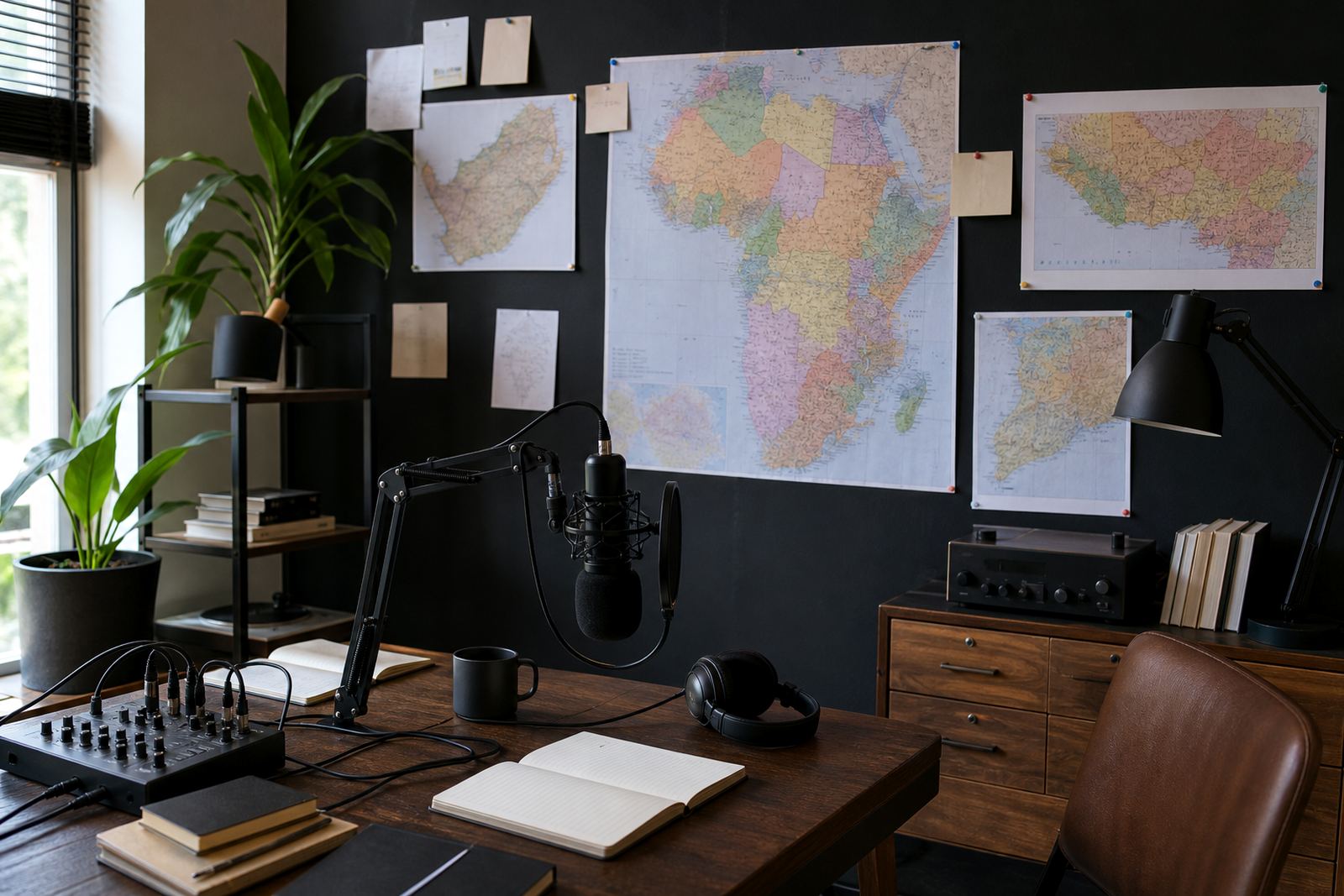
Our editorial series bring related podcast episodes and essays together so you can follow a subject from one angle to the next without losing the thread. If you want a broad starting point, look for series that explain core political ideas, institutional design, party systems and the way public debate changes across South Africa and the wider continent.
Some people prefer a country focus, while others want a theme that moves across borders. A history-led series is useful if you want background, while a policy or institutions series is better if you want to understand how power is organised and how decisions are made.
What You Will Find In Each Series
Every series is arranged to support steady reading and listening over more than one piece. That means you can start with a basic explanation, then move into deeper context, historical shifts and the institutions that shape everyday politics.
- Podcast episodes that introduce the main question
- Essays that add context and plain-language explanation
- Editing and research that keep terms clear and consistent
- Show notes that help you return to key points later
- Archive organisation for follow-up reading and listening
Series For Country-Specific Context
Some topics make more sense when viewed country by country. Our country-focused series can help you compare South Africa with Kenya, Nigeria, Ghana and Zambia, while still keeping each political system in its own setting. That matters because constitutions, election systems, local government and public institutions do not work in the same way everywhere.
If you are new to a country or after a long break from the series, begin with the introductory pieces. They usually set out the main institutions, the political history that still shapes debate, and the themes that keep appearing in current affairs. It is a practical way to build context without starting from scratch each time.
How To Read A Theme Across Several Pieces
Some of our best series are built around ideas rather than places. That can include populism, democratic accountability, constitutional rule, civic participation, media freedom, state capacity and the relationship between leadership and institutions. Following a theme across several pieces helps you see how one concept can appear in different political settings and at different points in history.
- Start with the overview piece for basic definitions
- Move to country examples for applied context
- Read the longer essays for historical background
- Listen to the related episode for tone and emphasis
- Return to the series later when current events change the angle
Why Careful Editing Matters In Long-Form Political Work
Political ideas can become muddy when terms are used loosely, especially in fast-moving news cycles. Our editorial process keeps the language direct and the structure tidy so the same idea is not explained in three different ways. A series then reads more clearly from one piece to the next, with less confusion.
We also check names, dates, offices and institutional references carefully. Across Johannesburg, Pretoria, Soweto, Nairobi, Lagos, Accra and Lusaka, that level of consistency matters. It helps make sure a discussion of parliament, cabinet, courts or local government stays accurate from one edition to the next.
Using The Series As A Learning Path
The editorial series works best as a route through connected questions rather than a one-off stop. Browse by country, issue or political idea, then follow the linked pieces at your own pace. The collection brings students, journalists and civically minded people a clearer view of African politics without the noise.
If you are looking for a starting point, choose a series that matches the question you are asking now. If you already know the basics, choose one that goes deeper into history, institutions or the public arguments around a topic. Either way, the aim is the same: steady learning from one well-ordered piece to the next.
- Pick a country or theme
- Read or listen in sequence
- Use the archive to revisit earlier pieces
- Send enquiries through the contact page if you need guidance on a series