Project brief from Rosebank, Johannesburg
Populism Africa Review approached this project from Rosebank, Johannesburg as an editorial series for audiences seeking a clearer view of youth politics across the continent. The brief was to produce an independent podcast and essay package that explained how young people engage with elections, protests, party structures, student politics and civic education without taking sides or making claims about individual politicians.
The client wanted the series to stay practical and readable for a broad audience, including university students, early-career workers and community organisers. The tone needed to be careful and plain spoken, with enough context for a South African audience while still making sense in Nairobi, Lagos, Accra and Lusaka. We also had to keep the work consistent across audio and text so each episode, essay and summary note could stand on its own.
- Client type: independent political commentary publisher
- Town and base: Rosebank, Johannesburg, Gauteng
- Project format: podcast series plus essays
- Main theme: youth participation, movements and political education
Editorial constraints we worked to
The strongest constraint was neutrality. The series had to explain political ideas, historical context and public institutions without endorsing any party, campaign or named living politician. That meant careful scripting around terms like representation, accountability, activism, governance and civic duty, with no election forecasts and no speculative claims about outcomes.
We also had to avoid loose generalisation. Youth politics can be discussed in slogans, but the brief called for grounded explanations: what youth wings do, how student structures shape political habits, why protest politics becomes visible at certain moments and how constitutional rules affect participation. Because the audience spans several countries, we made sure the language stayed broad enough to travel across borders while still using concrete examples of institutions, local government and civil society.
- No partisan framing or campaign language
- No fabricated guests, interviews, polls or statistics
- No claims about living politicians or parties
- Clear regional references without overloading the copy
What we supplied across the series
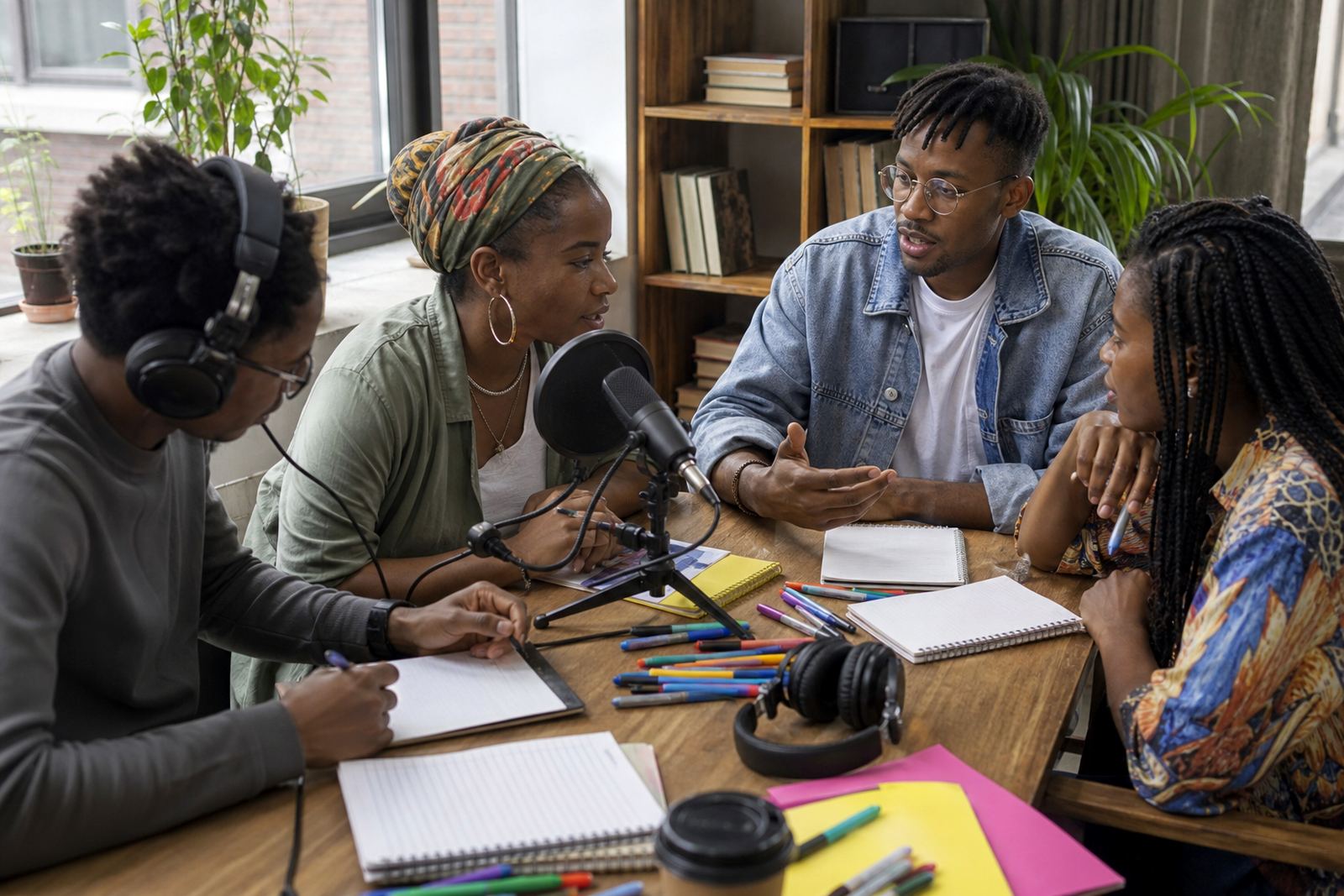
We handled the writing and production support end to end, from episode structure to final publication materials. That included research support, fact checking, script development, episode editing, show notes and publication scheduling. For the written side, we provided essay editing and copy editing so each article kept a steady tone and clean logic from opening paragraph to closing note.
The audio work was kept practical and tidy. We prepared scripts that could be read naturally, then shaped the episodes for pacing, emphasis and clarity. The archive management side of the job made sure the series stayed organised for future reference, re-use and internal tracking.
- Podcast production and episode editing
- Script development and research support
- Fact checking, essay editing and copy editing
- Audio mastering and show notes
- Series planning, publication scheduling and archive management
How the content was structured
The series was planned as a sequence of tightly linked topics rather than one long general discussion. That made it easier to explain the basics first, then move into more specific questions about youth-led movements, political learning and the way institutions shape participation. Each episode and essay used a clear starting point, a middle section that added context and a closing section that drew the idea back to daily life.
In practice, this meant building a repeatable structure that could be used across South Africa, Kenya, Nigeria, Ghana and Zambia. We mapped the series so each part answered a different question, but together they formed one coherent view of youth politics. This kept the work accessible without flattening the differences between countries.
- Introductory explainers on youth participation
- Context pieces on movements and civic education
- Country-aware discussion of institutions and local political habits
- Short summary notes to support each release
Timeline and delivery over six weeks
The project ran over six weeks from planning to publication support. The first week was spent agreeing the editorial scope, key questions and the sequence of topics. Weeks two and three were used for research support, script drafting and early editing. The fourth week focused on tightening the wording, checking factual references and shaping the show notes. Weeks five and six covered audio finishing, publication scheduling and archive organisation.
That timeline gave enough space to check detail without slowing the series down. It also left room for small adjustments where the writing needed more context or where a topic needed to be explained in plainer terms. The result was a steady release process that did not feel rushed and still kept momentum through the full run.
- Week 1: briefing and series plan
- Weeks 2 to 3: research and script drafting
- Week 4: editing and fact checking
- Weeks 5 to 6: mastering, scheduling and archive work
Results and what we would keep
The final series gave Populism Africa Review a clear, organised body of work on a topic that is often discussed in broad strokes. It offered a more careful view of youth politics in a format that can be revisited as public debates change. The combination of podcast and essay content also helped the material reach different audiences, whether they prefer listening on the move or reading during the day.
If we were to do the project again, we would keep the same basic method: short planning cycles, tightly checked scripts and a strong link between audio and written output. We would also keep the country-by-country framing, because it helps the discussion stay specific without turning the series into a set of disconnected notes. For a subject as active and sensitive as youth politics, that balance of clarity, restraint and structure works well.
- Clearer public understanding of the topic
- Reusable episode and essay structure
- Stronger link between audio and written publishing
- Suitable for a regional audience across several cities
Key facts
| Project type | Independent podcast and essay series |
|---|---|
| Topic | Youth participation, movements and political education |
| Region covered | South Africa, Kenya, Nigeria, Ghana and Zambia |
| Client base | Rosebank, Johannesburg, Gauteng |
| Timeline | 6 weeks |
| Core services | Podcast Production, Episode Editing, Script Development, Research Support, Fact Checking, Essay Editing, Copy Editing, Audio Mastering, Show Notes, Series Planning, Publication Scheduling, Archive Management |