Project brief from a Johannesburg policy and media audience
We were asked by an independent commentary publisher in Rosebank, Johannesburg to shape a series that explains how media systems influence politics without taking sides. The brief was to keep the writing grounded in general political history, institutions and public communication, while giving the podcast a clear editorial rhythm for listeners who want context rather than slogans.
The series speaks to people across South Africa and other African political centres, including Pretoria, Soweto, Nairobi, Lagos, Accra and Lusaka. The tone needed to be informed and practical, with enough background to make each episode useful to students, civic audiences and policy-minded listeners. A working structure for regular publishing and archive management also mattered, without losing consistency.
What the series had to cover and what we avoided
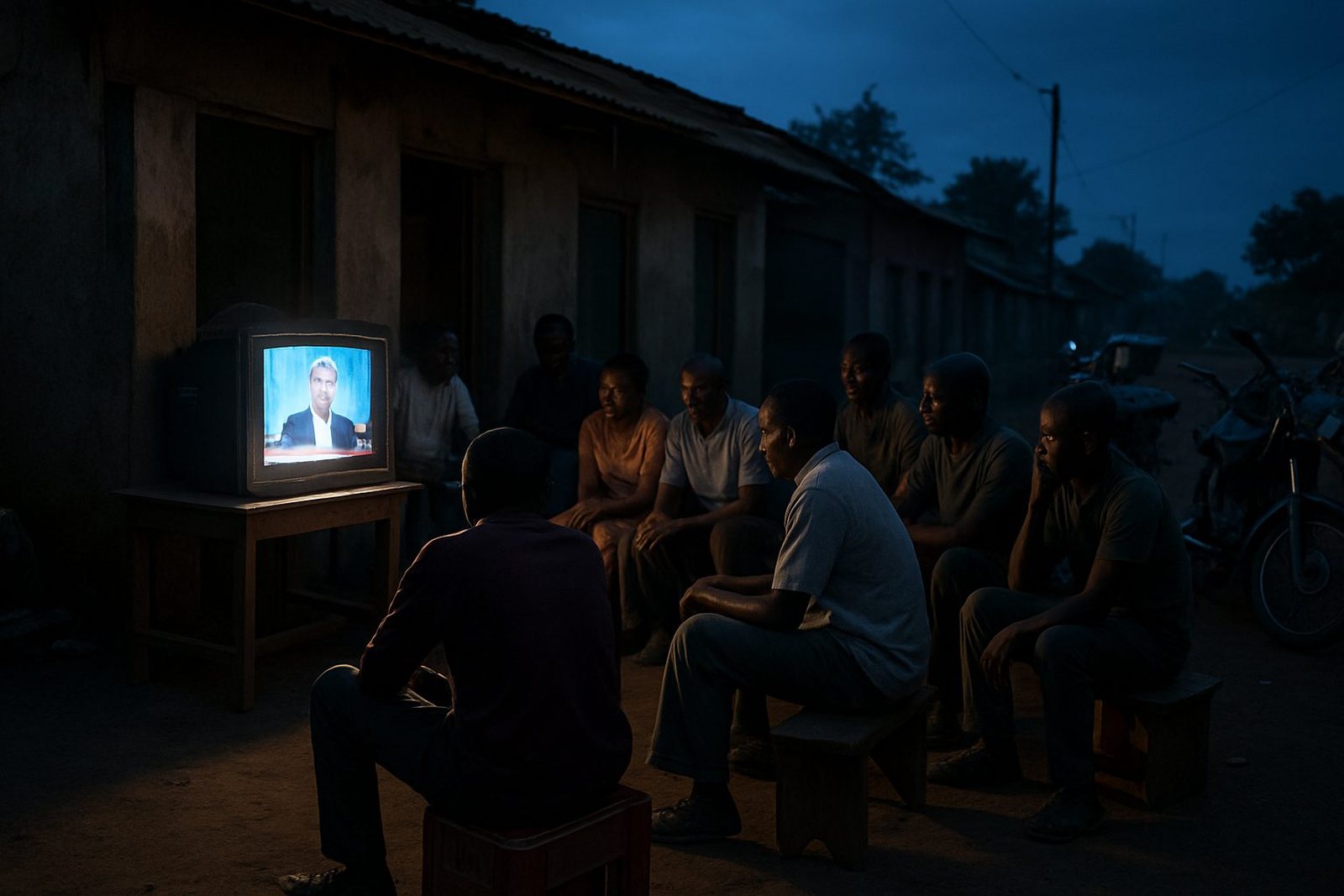
The core theme was the link between media and publics: how broadcast habits, print culture, and newsroom routines affect what people know, repeat and debate in political life. We kept the material broad enough to work across countries, but specific enough to speak to familiar African experiences such as state broadcasting, private radio, newspaper ownership, language choice and the rise of mobile listening.
- Explain the basic ideas behind agenda setting, public sphere thinking and political communication
- Show how media access changes in urban and peri-urban settings
- Compare older print traditions with podcast-led publishing
- Keep the series non-partisan and avoid party advocacy
- Exclude quotes, polls, named living politicians and election forecasts
There were also practical constraints. The series had to work for an audience across different countries, so we avoided country-specific assumptions where they were not needed. We also had to keep the language clear for long-form listening and essay reading, while making sure the facts sat cleanly in every script and editorial note, even when the topic moved between history, regulation and audience behaviour.
Editorial work done for the podcast and essays
We supplied a full support package for the series, from research through to publication scheduling. That included episode structure, script development, fact checking, editing and audio finishing notes, plus short show notes for each release. For the essay side of the project, we handled copy editing and publication support so the written pieces could stand on their own without drifting away from the podcast narrative.
- Research support on broadcast history and press development in Africa
- Script development for clear episode flow and listener pacing
- Episode editing to tighten arguments and remove repetition
- Audio mastering notes for final delivery and consistent levels
- Show notes, series planning and archive management
Because the series dealt with institutions and media history, fact checking mattered throughout. We checked dates, terminology, political system references and the basic logic of each explanation. The work was less about dramatic claims and more about getting the framing right. That meant careful handling of terms like public sphere, editorial independence and audience formation so the series stayed accurate and easy to follow, not overcomplicated.
How the team in Rosebank worked on the project
The project sat with a small editorial team based in Rosebank, Johannesburg, with clear roles across production and publishing. Thabo Michael Mabuza oversaw the direction of the series, Naledi Seakamela handled editorial review, Aisha Daniels managed podcast production, Kwanele Dlamini led the research process, Nadia Barnard coordinated publishing, and Ntando Ndaba managed audience and partnership handling.
That split helped the project move quickly without losing control of detail. Research notes could be checked before scripts were locked, and publication scheduling could be set alongside the audio workflow. It also meant the series could be kept current without rushing, which matters when you are covering political communication across multiple countries and want the material to remain useful beyond a single news cycle.
- Managing Director: Thabo Michael Mabuza
- Editor: Naledi Seakamela
- Podcast Producer: Aisha Daniels
- Research Lead: Kwanele Dlamini
- Publishing Coordinator: Nadia Barnard
- Audience and Partnerships Lead: Ntando Ndaba
Timeline and delivery over six weeks
The project ran over six weeks from brief to final delivery. The first week focused on scoping the series, agreeing the subject boundaries and setting the editorial order. Weeks two and three were used for research, source cross-checking and script outlines. Weeks four and five covered editing, show notes and audio review, while the final week was used for publication scheduling and archive setup.
That schedule balanced depth with regular release planning. It also left enough time to test whether each episode answered a clear question about media and politics rather than trying to cover too much in one sitting. The result was a series that offered a steady introduction to the topic in both audio and written form.
Clearer political understanding across Africa
The finished series gave the publisher a clear editorial identity around media, politics and public debate. It created a stronger link between the podcast and the essay platform, and it made the archive easier to use because each episode sat inside a recognisable theme. The material was also easier to share across different towns and regions because it explained ideas in plain language rather than relying on inside jargon.
The main result was clarity. Radio, newspapers and online publishing could be understood in terms of how they shape political attention, with essays and episodes working together without requiring specialist training. The series also supported a more measured public tone, which is useful in political commentary where the goal is understanding rather than noise. That kind of work takes care, and sometimes a steady hand matters more than speed.
- Stronger structure for a recurring commentary series
- Clearer connection between podcast episodes and essays
- Better archive organisation for future access
- Consistent non-partisan tone across all output
- Material suited to Johannesburg and wider African audiences
Kept for the next series
On a project like this, we would still begin with research, move to structure, then finish with editing and publication planning: research first, structure second, then editing and publication planning. That sequence keeps the facts steady and gives the host team room to think through difficult ideas without crowding the process. We would also keep the writing broad enough to travel across borders, while still using specific African examples where they help the listener understand the point.
For a publisher working from Johannesburg with audiences in South Africa, Kenya, Nigeria, Ghana and Zambia, that approach makes sense. It supports regular output, keeps the archive usable and leaves room for future series on media ownership, language politics, civic education and public broadcasting. The method is simple, but it works when the subject is serious and the audience expects care.
Key facts
| Project type | Podcast and essay series on media and political audiences |
|---|---|
| Client location | Rosebank, Johannesburg |
| Audience reach | South Africa, Kenya, Nigeria, Ghana and Zambia |
| Timeline | 6 weeks from brief to final delivery |
| Services | Podcast Production, Episode Editing, Script Development, Research Support, Fact Checking, Essay Editing, Copy Editing, Audio Mastering, Show Notes, Series Planning, Publication Scheduling, Archive Management |
| Editorial stance | Independent, non-partisan political commentary |