

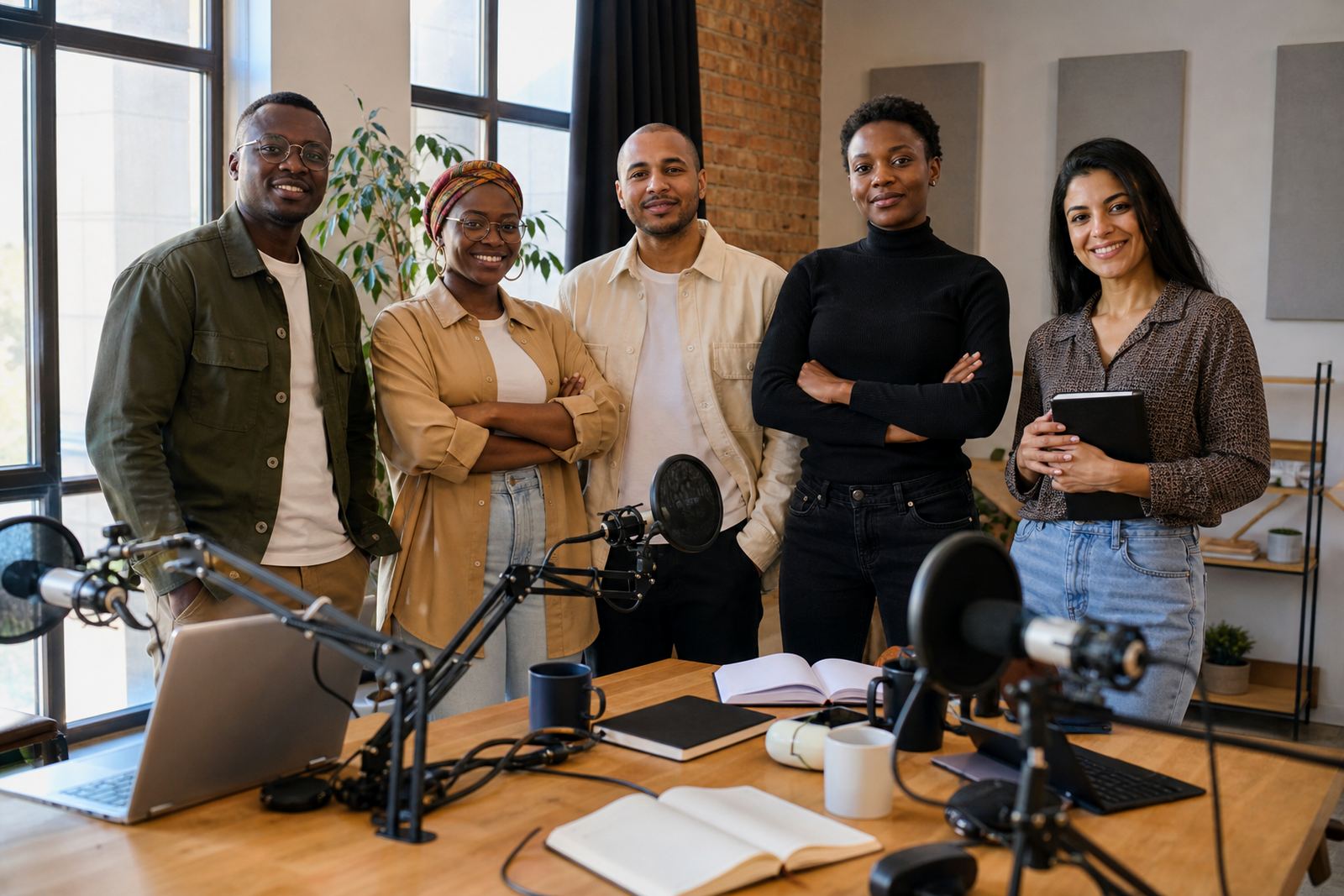
A small team with a wide continental brief
Based in Rosebank, Johannesburg, the team works across podcast production, essays and supporting editorial services for clear political explanation without noise. Their focus is practical: how institutions work, why political ideas matter, and what changes when public systems shift. It is careful work, and at times it means saying what is known and what still needs checking.
From local issues in Gauteng to wider debates in Nairobi, Lagos, Accra and Lusaka, the team keeps the tone measured and the research grounded. That approach helps them publish material that is useful for students, professionals and ordinary citizens trying to make sense of politics in Africa.
- Independent editorial judgement
- Research-led podcast and publishing support
- Coverage shaped for South African and wider African audiences
Thabo Michael Mabuza leads the editorial direction
Thabo Michael Mabuza, Managing Director, oversees the overall direction of Populism Africa Review. He helps set the editorial standard, keeps the long view on the publication’s purpose and makes sure the work stays focused on public understanding rather than noise. His role sits at the point where editorial judgement, publishing timing and audience needs meet.
Working from Rosebank, he gives shape to the wider programme of podcasts and essays, with attention to political institutions, democratic practice and the language used to explain both. He is the one keeping the room calm when a topic becomes crowded, and that matters when the aim is clarity over speed.
Naledi Seakamela keeps the writing disciplined
Naledi Seakamela, Editor, works on structure, tone and accuracy across the written material. She helps ensure that each essay or show note is readable, fair and properly organised, with the argument built in a way that makes sense from the first paragraph to the last. Her work is especially important when topics are complex, because good editing keeps the meaning intact.
She also supports consistency across the publication, so the style remains clear and recognisable from one piece to the next. A piece can be strong in research but still need a careful hand, and Naledi is the person who catches those rough edges. Sometimes that means trimming too much explanation, sometimes it means adding more context.
- Essay structure and line editing
- Tone checks for neutrality and clarity
- Consistency across long form commentary
Aisha Daniels shapes the podcast in the studio
Aisha Daniels, Podcast Producer, looks after the practical side of audio production from planning to final delivery. She works on episode flow, recording preparation and the smooth movement between sections so that the podcast remains easy to follow. Her job is part technical, part editorial, and it is often where the pace of the show is decided.
For audiences listening in Johannesburg, Pretoria or further afield, her work helps create a clean listening experience whether someone is streaming on a commute or catching up after work. She also has a steady hand with episode timing, which helps keep discussions focused without making them feel rushed. In a field where plenty of audio sounds messy, that discipline is worth a lot.
Kwanele Dlamini checks the facts before anything goes out
Kwanele Dlamini, Research Lead, gathers background information, checks claims and helps the team place current events in historical context. His work supports careful explanation of political systems, constitutional arrangements and electoral rules across Africa. That means looking beyond headlines and asking what a claim actually means in practice.
He works closely with the rest of the team on source checking and background reading, especially when a topic needs more than a quick summary. Good research is not only about finding facts, it is about understanding how those facts fit together. Kwanele brings that method to the table, and it shows in the steadier pieces.
- Background research and source checking
- Context on institutions, laws and procedures
- Support for issue-led rather than event-led commentary
Nadia Barnard manages the publishing rhythm
Nadia Barnard, Publishing Coordinator, keeps the release schedule moving and makes sure each piece is prepared for publication on time. She handles the practical coordination that lets essays, episodes and supporting copy move through the process without confusion. When several items are in motion at once, that kind of organisation makes a real difference.
Her work also supports archive management, so published material remains easy to find later on. For a publication covering politics across South Africa, Kenya, Nigeria, Ghana and Zambia, a clear archive is not a luxury, it is part of the service. Nadia helps keep that record tidy and usable, even when the week gets busy.
Ntando Ndaba connects the work to its audience
Ntando Ndaba, Audience and Partnerships Lead, handles partnerships, external communication and audience development. He looks after collaboration enquiries with an eye on fit and credibility. The work centres informed political discussion and sustained public interest, not attention for its own sake.
His role sits close to the public side of the work, where questions of reach, relevance and trust matter every day. That last bit matters, because good political commentary only works if people can actually find it and use it.
Across the team, the common thread is simple: do the reading, check the claims, edit carefully and publish with purpose. It is a quiet kind of discipline, but it keeps the work honest and useful.