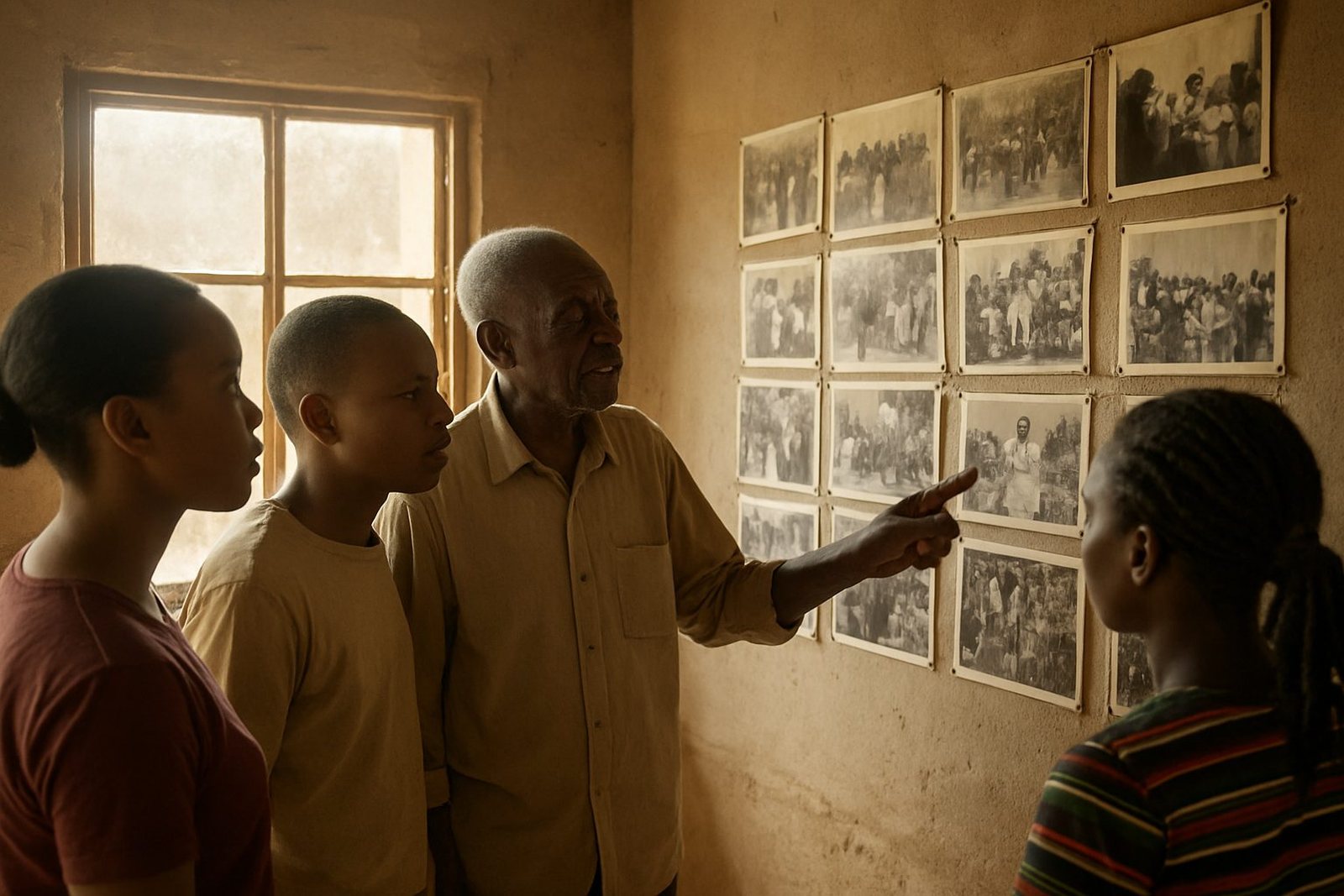
Project brief from a Johannesburg editorial team
The brief came from an independent political commentary publisher based in Rosebank, Johannesburg, with an audience across South Africa and other African capitals. The brief sounded direct, but the work depended on careful constitutional and institutional detail: produce a series that explains how federalism works in Nigeria, why state and national institutions matter, and how representation is shaped by the country’s constitutional arrangements.
The material needed to be useful for people who may know the broad headlines of Nigerian politics but not the structure behind them. The tone had to stay measured, non-partisan and grounded in general political knowledge. No election forecasting, no party messaging, no claims about living politicians, and no fabricated colour or drama. The output needed to help people understand the system before they formed strong opinions about it.
Because the series sat within a podcast and publishing platform, it also had to work in two formats at once. The audio version had to be clear and easy to follow. The essay version had to hold together on the page, with definitions, context and enough structure to guide a reader through a topic that can become technical very quickly.
Editorial constraints and what we had to respect
Nigeria’s federal structure involves a lot of moving parts, so the main constraint was discipline. We had to explain institutions without slipping into editorial opinion or partisan framing. The content needed to stay focused on the constitutional basics, historical background and the practical meaning of federal power, state authority and representation.
There were also content limits tied to accuracy and neutrality. We did not use polls, fabricated quotations, or unverifiable claims. We avoided commentary on any named living politician or party, and kept the series at the level of institutions, ideas and historical development. That gave the project a clean editorial line and made the finished series easier to trust.
For a cross-border audience, another challenge was language. Terms such as federalism, devolution, constituency, chamber, revenue allocation and state autonomy can be familiar to specialists but less so to general listeners. We had to explain them without sounding stiff. That meant short definitions, direct examples and a steady pace, with no need to overstate the point.
- Strictly non-partisan editorial treatment
- No fabricated interviews, guests or statistics
- No claims about living politicians or parties
- Clear explanations of institutions and historical context
Research, scripting and fact checking process
We began with a research outline that mapped the series into clear sections: the meaning of federalism, the Nigerian state structure, representation in practice, and the relationship between national and state powers. From there we shaped a script sequence that moved from general principles into Nigeria-specific context, so the listener could follow the argument without getting lost in legal language.
Our research support and fact checking looked at constitutional structure, the division of powers, the role of states, the logic of representation and the long-running debates around decentralisation. We also checked terminology carefully, because the same word can mean different things in different African political settings. That helped us keep the language exact without making it dry.
The writing stage involved script development, essay editing and copy editing in tandem. This meant the spoken version and the written version could stand together without repeating themselves in awkward ways. It also helped us control pacing. One section might need a clean one-paragraph explanation for audio, while the same idea on the page could use a short list for clarity.
- Research support for constitutional and institutional context
- Script development for audio clarity
- Essay editing and copy editing for the written series
- Fact checking against general source material and established political knowledge
Podcast production and publication support
On the production side, we handled the practical work that makes a political series easier to publish and reuse. That included podcast production, episode editing, audio mastering, show notes and series planning. The aim was not to make the series sound over-produced.
We also prepared publication scheduling and archive management so the series could sit properly within the publisher’s catalogue. This matters for a topic like Nigerian federal debate, because listeners often return to a series later when another political issue makes the background relevant again. Having the material properly ordered and labelled makes that return visit far easier.
The final package was structured so that each episode could be introduced with short explanatory notes and then supported with a readable essay. That format worked well across Johannesburg, Pretoria and Soweto, and also for audiences further afield in Nairobi, Lagos, Accra and Lusaka.
- Episode editing and audio mastering
- Show notes written for quick context
- Series planning to keep the argument in order
- Archive management for later reference
Timeline and delivery pace
That timeline was practical for the scope of the work. A subject like federalism cannot be rushed if the goal is to stay clear and accurate. We had enough time to check structure, rework explanations where needed and make sure the final sequence read naturally from start to finish. There was no need to overload the listener with too much terminology at once, which can happen if a script is pushed out too quickly.
The client needed a process that stayed responsive but did not drift. We kept to that rhythm and left enough space for review at the key points. It meant decisions were made early rather than fixed at the end, which is usually the better way to handle a political education series.
Results and what we would keep
The finished project gave the publisher a clear, reusable series on Nigerian federal debate that could sit beside other African political commentary content. The main result was not just a set of episodes and essays, but a stronger editorial framework for explaining a complex system in plain language. The series also created a useful reference point for future discussions on state structure, representation and constitutional design across the continent.
What worked best was the combination of careful research, plain wording and good structure. The audience could hear the argument without feeling pushed toward a view. That matters in political publishing, especially where the goal is understanding rather than persuasion. The project also showed the value of treating the audio and written formats as linked products instead of separate jobs.
- Clear explanation of federal arrangements in Nigeria
- Strong alignment between podcast and essay formats
- Measured tone suited to independent political commentary
- Reusable archive value for future editorial work
Key facts at a glance
This project centred on Nigeria’s federal arrangements, representation and state structure, with a focus on clear explanation rather than political advocacy. It was developed for an independent publisher in Rosebank, Johannesburg, and shaped for an audience interested in African politics across several regions.
Key facts
| Project | Nigeria Federal Debate |
|---|---|
| Client type | Independent political commentary publisher |
| Base town | Rosebank, Johannesburg |
| Main topic | Federal arrangements, representation and state structure in Nigeria |
| Delivery format | Podcast series and essay series |
| Timeline | 4 weeks |