A Johannesburg Brief Focused on Metros, Not Noise
Populism Africa Review is an independent political commentary publisher based in Rosebank, Johannesburg, with listeners across South Africa and a wider African audience. The City Politics series explains how metropolitan government works, why transport and housing sit at the centre of urban politics, and how local institutions affect daily life in places such as Johannesburg, Pretoria, Soweto, Nairobi, Lagos, Accra and Lusaka.
The ask was specific. Keep the tone non-partisan, avoid slogans, and make the material useful to listeners who want context rather than point scoring. The series had to cover city councils, mayors, planning, service delivery, municipal finance, informal settlement pressure and the politics of commuting without drifting into party commentary. That meant every episode and essay needed a clear structure, plain language and solid checks on names, dates and institutional detail.
What We Planned for the Series
We started by mapping the editorial shape of the project. The series needed enough repetition to feel consistent, but each instalment had to stand on its own. We built a run of topic areas that could be used across podcast episodes and written essays, with room for South African examples and comparisons from other African cities.
Key points in the planning stage included:
- Episode themes covering transport, housing, budgeting, land use, informal trade and municipal politics.
- Essay angles that explained institutions, not personalities, so the writing stayed neutral.
- A publishing cadence that could be maintained by a small team without overloading production.
- Research notes that flagged legal and administrative terms for local audiences in different cities.
- Structure for openers, transitions and closes, so each episode kept a steady rhythm.
We also set a simple rule for the series voice: explain the system first, then the debate around it. That kept the commentary grounded and helped avoid overstatement.
Research, Fact Checking and Copy Support
Our team supported the series from outline to final copy. Kwanele Dlamini led research support and fact checking, with Naledi Seakamela handling editorial review and Nadia Barnard coordinating the publishing flow. We checked municipal structures, terminology around metro governance, and the way city powers differ from province to province. The aim was not to produce academic writing, but to make sure every explanation was accurate and easy to follow.
We supplied:
- Script development for episode outlines and recurring segments.
- Research support on city government, urban planning and housing policy.
- Fact checking for place names, institutional roles and public process.
- Essay editing and copy editing for clarity, tone and consistency.
- Show notes that gave listeners a quick summary and useful signposts.
- Archive management so older material stayed accessible and properly ordered.
Because the subject matter touches public life in cities with different administrative systems, we kept the language general where needed and specific where useful. That helped the series stay relevant across South Africa and the wider region.
Podcast Production and Publishing Workflow
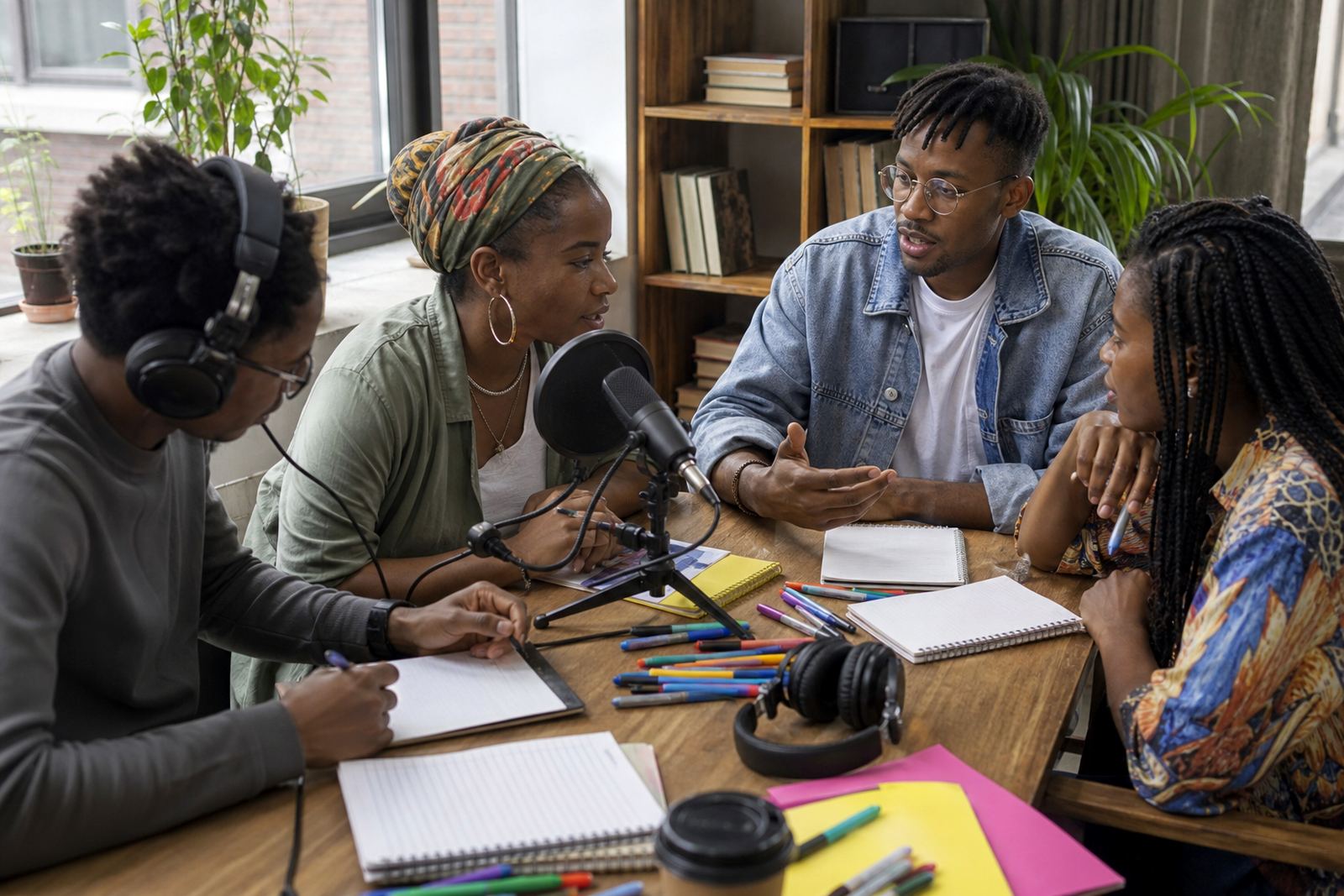
A series like City Politics has to sound calm and organised even when the subject is messy. A commuter question in Johannesburg, for example, can open into a broader discussion about spatial inequality, municipal budgets and how planning decisions are made. Our production work helped keep those links tight. Aisha Daniels handled podcast production and audio mastering, while Ntando Ndaba supported audience and partnerships planning so the series could reach the right listeners without losing its independent character.
The workflow covered:
- Episode editing for pacing, clarity and clean transitions.
- Audio mastering for consistent volume across files.
- Series planning so topics moved from core institutions to lived experience.
- Publication scheduling across podcast and essay releases.
- Show notes written in plain South African English.
That kept the series moving even when the week changed underfoot, which is often the case.
Timeline, Scope and Working Rhythm
The project ran over a planned 10 week cycle. The first two weeks were used for briefing, topic mapping and research notes. Weeks 3 to 6 covered script development, editing and the first round of audio production. Weeks 7 to 8 were set aside for review, corrections and publication preparation. The final two weeks were used for scheduling, archive setup and follow-up support.
The scope was manageable, but detailed. The client wanted a series that could be published steadily, with each episode linked to a written essay and a clean set of notes. That meant close coordination between the editorial and production sides. Thabo Michael Mabuza oversaw the project as Managing Director, keeping the tone aligned with the broader publishing direction while allowing the team room to work.
What the Series Achieved and What We’d Repeat
City Politics established a clear and repeatable format for explaining urban governance across African cities. The main result was a body of work that could move between podcast and essay formats without losing focus. People could move from an explanation of municipal powers to a discussion of housing, transport or land use without needing specialist background first.
What worked well:
- A neutral tone that kept the series accessible to a broad audience.
- Consistent editorial structure across episodes and essays.
- Strong research discipline around institutions, processes and terminology.
- Clear production support that reduced delays and kept the release plan steady.
- Archive organisation that made earlier material easy to retrieve and reuse.
If we were doing the series again, we would keep the same research first approach and build in even more room for city-by-city comparisons. The subject rewards careful repetition, and each city has its own pressure points. That is where the value sits.
Key facts
| Client type | Independent political commentary publisher |
|---|---|
| Town | Rosebank, Johannesburg |
| Project type | City Politics podcast and essays |
| Coverage | South Africa, Kenya, Nigeria, Ghana and Zambia |
| Timeline | 10 weeks |
| Team lead | Thabo Michael Mabuza, Managing Director |