Project brief from Rosebank, Johannesburg
The series examines Ghana Civic Traditions through rigorous, non-partisan political commentary. Based in Rosebank, Johannesburg, the work connects civic culture, constitutionalism and the ways institutions, media and local history shape public dialogue in Ghana, while remaining relevant across South Africa, Kenya, Nigeria and Zambia.
The request was specific. The series had to explain political ideas clearly, avoid partisan framing and stay grounded in general knowledge rather than claims about living politicians or election outcomes. It also needed to work as a publishing package, not just a single audio episode. That meant planning for script development, episode editing, essay editing and publication scheduling from the start.
- Client type: independent political commentary publisher
- Town: Rosebank, Johannesburg
- Region served: Ghana and a wider African readership
- Project type: podcast series plus written essays
What the series set out to explain
The editorial angle centred on the civic traditions that shape democratic life in Ghana, with attention to how constitutions, public institutions and civic language influence everyday political discussion. We treated the topic as a learning series rather than a campaign message, so the tone stayed practical and calm. This approach helped keep the material useful for people who want a better grasp of public life without being pushed toward a conclusion.
We planned the series around broad themes that could be explained cleanly in audio and in print. These included the role of constitutional rules, the place of public debate in civic life and the way political memory often informs present-day expectations. The material had to stay balanced and accurate, with enough context for someone hearing the series for the first time.
- Civic culture and public participation
- Constitutionalism and institutional authority
- Media, commentary and informed citizenship
- Historical context without speculation
Constraints we worked within
The most important constraint was strict non-partisanship. We could explain political ideas, institutions and historical developments, but we could not make claims about named living politicians or parties, and we could not include endorsements, polling or election predictions. The brief also ruled out fabricated interviews, guest commentary and statistics that were not already part of the approved source material. That kept the work disciplined and suitable for an audience that expects careful language.
We also had to make sure the series sounded local to Ghana without drifting into generalisation. Political language in African contexts can be slippery, so we kept the phrasing measured and avoided overstatement. The final copy was written for clarity, with enough detail to carry the listener through the subject and no unnecessary noise.
- No partisan language or campaign framing
- No fabricated quotes, guests or poll figures
- No claims about living politicians or parties
- No election forecasting or endorsement
What we supplied and how it was managed
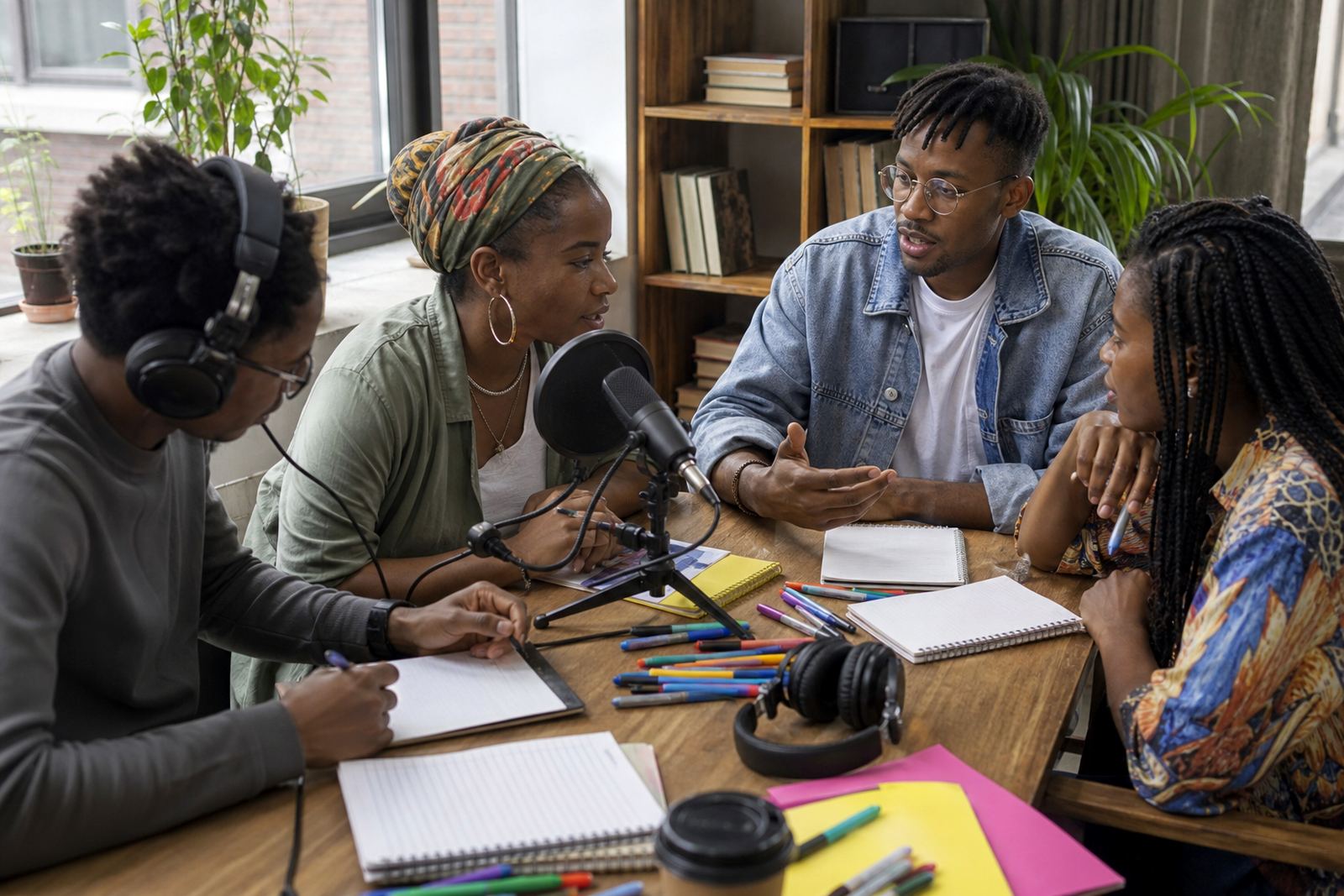
We handled the series as a full production and publishing workflow. That included research support, script development, episode editing, fact checking, essay editing and copy editing. Once the audio material was locked, we prepared show notes and publication copy that matched the tone of the episodes.
The publishing side included series planning, publication scheduling and archive management so the project could be released in a steady order and stored properly for later reference. The written pieces were edited to match the podcast themes, so the audience could move between listening and reading without a jump in tone or standards.
- Research support and source checking
- Episode editing and audio mastering
- Script development and show notes
- Essay editing, copy editing and scheduling
Timeline and working rhythm
That pace worked well because the subject required patience. A series on civic traditions only lands properly when each part has room to explain itself. We did not want the material to feel crowded, and we did not want to over-edit away the character of the original thinking. The process was steady, practical and easy to manage across the whole team.
- Week 1: outline and research framing
- Weeks 2 to 3: scripts and editorial review
- Weeks 4 to 5: editing, fact checking and copy work
- Week 6: mastering, scheduling and final approval
Results for the Ghana audience
The series examines Ghanaian civic life without reducing the subject to party politics. Constitutionalism, public conversation and the role of civic habits in political life stay at the centre, while the wider African frame shows how a country-specific subject can be handled with discipline and care.
From a publishing point of view, the project worked because the audio and written formats supported each other. The podcast carried the voice and pacing, while the essays made the ideas easier to revisit. That gave the audience more than one way to engage with the material, and it made the archive more valuable over time.
- Clearer presentation of Ghana-focused civic themes
- Better alignment between podcast and essays
- Long-term archive value
- Consistent non-partisan editorial tone
What we’d repeat on a similar project
If we were doing this kind of project again, we would use the same disciplined sequence: outline first, evidence second, then editing and publication planning. That order works well for political commentary because it prevents the content from drifting into opinion for its own sake. It also gives the team room to keep the language grounded and the facts clean.
Close coordination between audio and publishing from the start makes the script, episode edit and written version easier to follow and easier to trust. For a project on civic traditions, that matters as much as the content itself. The work stays useful across different African contexts.
- Start with a clear editorial map
- Keep research and editing tightly linked
- Plan podcast and essay outputs together
- Protect a measured, non-partisan tone
Key facts
| Project | Ghana Civic Traditions |
|---|---|
| Base | Rosebank, Johannesburg, Gauteng |
| Audience | People interested in Ghana and wider African politics |
| Format | Podcast series with companion essays |
| Timeline | 6 weeks |
| Core services | Podcast Production, Episode Editing, Script Development, Research Support, Fact Checking, Essay Editing, Copy Editing, Audio Mastering, Show Notes, Series Planning, Publication Scheduling, Archive Management |