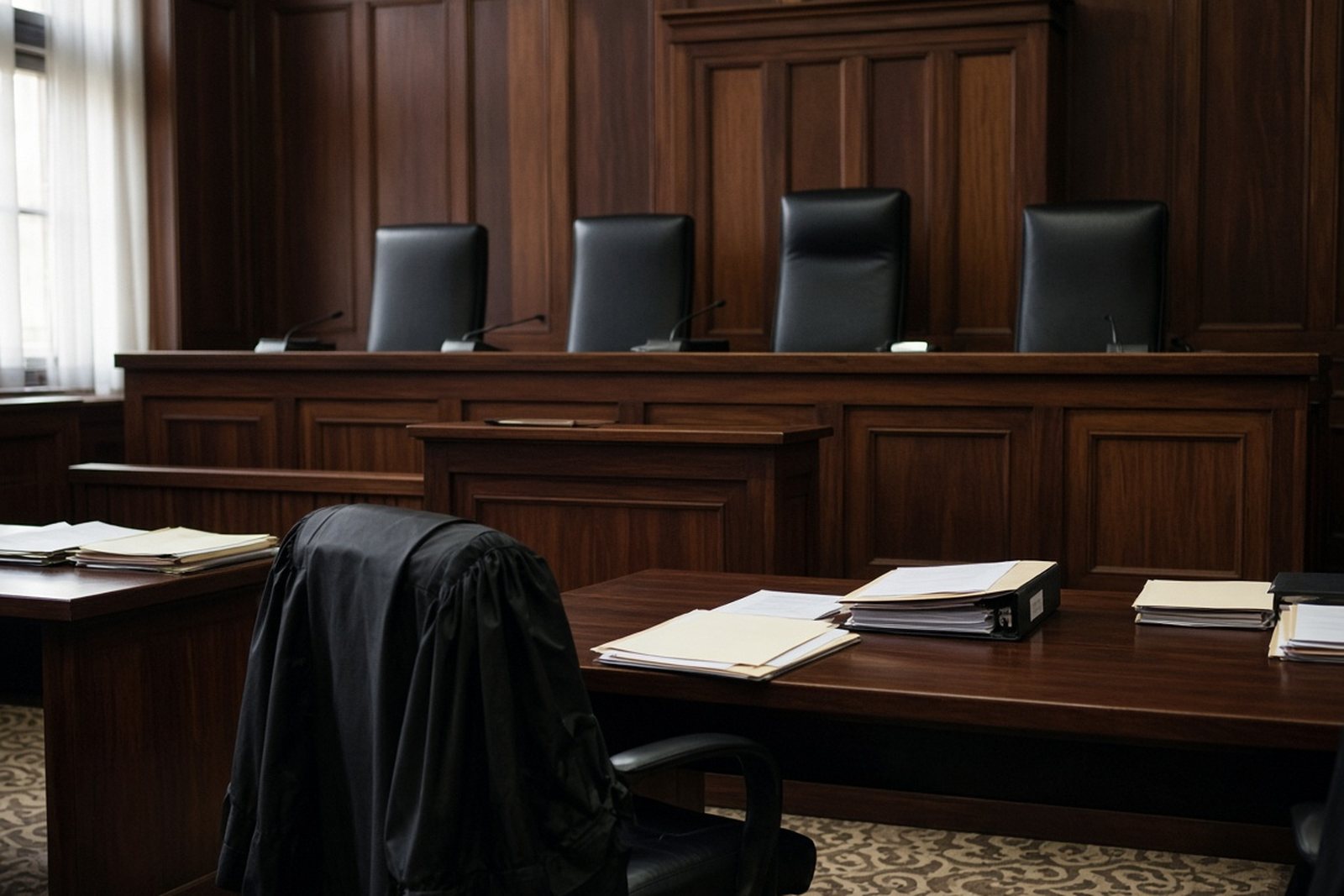
Why court coverage needs careful treatment
A courts series is not just about legal drama. It explains how judges interpret constitutions, how lower courts differ from higher courts, and when a matter is about rights, procedure, or the limits of executive power. That means each episode or essay has to separate legal principle from party politics, and keep the focus on institutions rather than personalities.
In South Africa, this often includes constitutional review, separation of powers, access to justice, and the relationship between courts and Parliament. Across Africa, similar questions come up in Nairobi, Lagos, Accra and Lusaka, though each system has its own court structure, history and legal language. Our work is to help make those differences plain without overcomplicating the basics.
Typical production set for a courts series
For a weekly commentary podcast and companion essays, the usual set is compact and practical. A small studio in Rosebank or a quiet office in Johannesburg can handle the full workflow if the room is controlled and the files are organised properly. Clean speech matters more than fancy gear, especially when discussing names, legal terms and dates.
- 2 to 4 microphones with stands or table mounts for solo or panel episodes
- Closed-back headphones for monitoring during recording and editing
- Basic acoustic treatment to reduce echo in tiled or glass rooms
- Editing computer with enough storage for long-form interviews and archives
- Script notes, source folders and a clear naming system for cases and episodes
For Johannesburg offices, power cuts and traffic timing can affect recording schedules, so backup batteries and a simple file transfer routine are worth planning for from the start.
How we plan an episode or essay series
The best courts content starts with a narrow question. For example, what does judicial review actually mean, when can a court strike down a decision, or why does institutional independence matter even when people disagree with a judgment? A focused question keeps the episode from becoming a general politics discussion.
We usually build each release around one legal idea, one case type, and one clear takeaway. That might be constitutional interpretation, the role of precedent, the difference between civil and criminal procedure, or how legal institutions protect due process. The language should stay accessible for listeners in South Africa, Kenya, Nigeria, Ghana and Zambia, with enough context for first-time listeners too.
- Decide the legal question before writing the script
- Separate facts, legal principles and commentary into different sections
- Use plain language for key terms such as jurisdiction, appeal and review
- Keep episode length realistic for listener attention and editing time
- Match the essay to the audio so both carry the same central argument
Common mistakes in courts commentary
One common mistake is treating every court matter as a referendum on a government or opposition figure. That can distort the law and make the content less useful. Another is using legal terms too loosely. If a matter is about review, say review. If it is about appeal, say appeal. Those distinctions matter.
It is also easy to overload a script with too many cases at once. A listener can follow one constitutional issue, but not five different jurisdictions in one sitting. Poor audio is another problem, because courtroom language is often dense and any hiss, echo or clipping will make it harder to follow. A clean, steady recording matters more than a rushed production, especially when the topic is already technical.
Editing, fact checking and archive control
Court reporting depends on accuracy. Names of institutions, dates of judgments, case numbers and procedural steps should be checked before release. That does not mean turning the show into a legal journal, but it does mean taking care with references and quotations. Where a matter is still unfolding, the script should make clear what is settled and what remains pending.
For a long-running platform, archive management is just as important. Past episodes and essays should be labelled by country, court level and topic so a later listener can find them quickly. This is especially useful for subjects like constitutional courts, election petitions, administrative review and judicial appointments, which often return in new forms over time.
- Verify legal names, dates and procedural status before publishing
- Keep source notes separate from draft commentary
- Store audio masters, scripts and final notes together for easy retrieval
- Use clear tags for country, institution and issue area
Budget ranges in Rand for a small courts production
Budgets depend on whether the work is occasional commentary or a full publishing schedule with multiple episodes, essays and archive updates. For a lean setup in Johannesburg or Pretoria, a basic production package can start around R18,000 to R35,000 for equipment and essential setup support. That covers the core recording kit, basic sound treatment and a workable editing station.
For a more consistent publication schedule with script development, fact checking, editing, show notes and audio mastering, monthly production costs often sit between R12,000 and R40,000 depending on volume. If the series includes frequent episodes, extra research support, bilingual adaptation or tighter turnaround times, the figure can rise further. It helps to plan around the actual publishing rhythm rather than guessing at a yearly total.
Small practical choices save time and reduce retakes.
Who this is best suited for
Organisations and independent publishers can explain courts without turning the content into legal advice or partisan commentary. It works well for anyone who wants a stronger grasp of judicial review, constitutional limits, legal interpretation and institutional independence across African democracies.
Populism Africa Review is based in Rosebank, Johannesburg, and serves clients across Johannesburg, Pretoria, Soweto, Nairobi, Lagos, Accra and Lusaka through a clear enquiry process. For a courts topic page, the aim is steady, informed explanation that helps audiences understand how legal institutions function in practice, not just in theory.