Why civil society matters in African public life
Civil society includes community associations, advocacy groups, faith-based networks, professional bodies, unions, student formations and public-interest organisations. These groups often step in where services are weak, rules are contested or communities need a stronger voice. In South Africa, Kenya, Nigeria, Ghana and Zambia, civil society can influence law, budgeting, service delivery, land questions and human rights debates without being part of government.
A protest, petition or policy submission means more when it is explained through the right history, institutions and legal process. Civil society coverage works best when it explains the issue, maps the actors and shows how public organising fits into the wider political picture. A steady, non-partisan tone keeps the focus on understanding rather than cheerleading.
The kind of coverage this topic page supports
This use case suits organisations and audiences that need clear coverage of public action and civic pressure. That can include a podcast episode on a protest wave in Johannesburg, an essay on NGO regulation in Nairobi, or a publishing series on civic participation and local accountability in Lusaka. We also handle cross-border themes such as funding rules, labour organising, youth movements and the role of civic coalitions in democratic transition.
Civil society coverage can include one-off explainers, short audio commentary, issue-led essay series and reference pieces that can be revisited over time. Because civil society topics change quickly, the format needs to be easy to update and simple to schedule. That keeps the work useful when a court ruling lands, a march is called or a public hearing changes direction.
- Podcast scripting and episode planning for current civic issues
- Essay editing for long-form analysis and public commentary
- Research support on laws, institutions and policy background
- Fact checking for names, dates, locations and procedural details
- Show notes and archive organisation for older episodes and essays
How we plan an episode or essay on civic organising
A strong civil society piece starts with a clean brief. The first question is what public problem is being discussed and who is affected. From there, the structure should move from the immediate event to the larger institutional picture. For example, if a civic group is raising concerns about municipal services, the piece should explain the issue, the relevant laws, the role of local government and the practical steps that citizens can take. That keeps the discussion grounded.
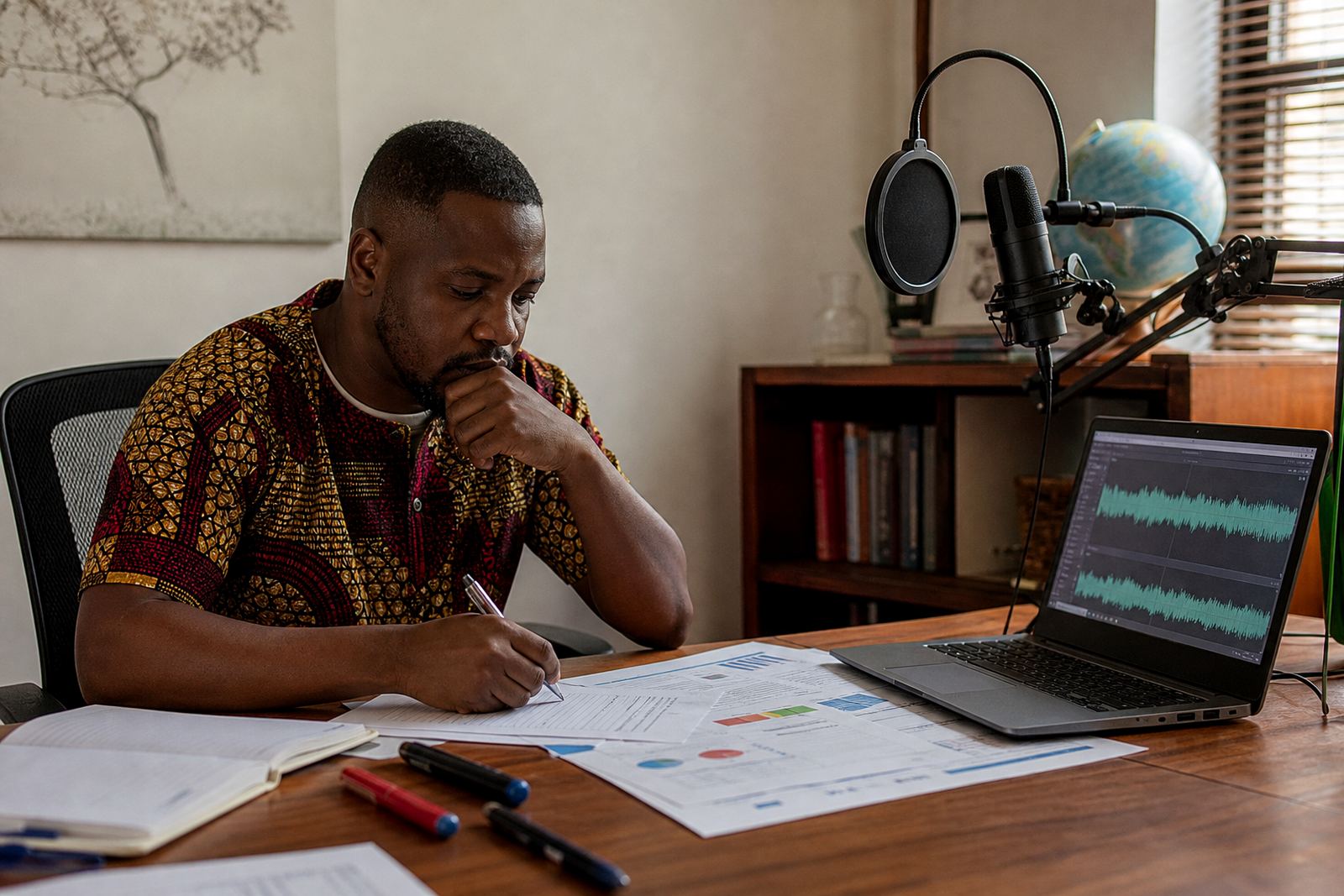
Our production team in Rosebank, Johannesburg works across podcast and publishing workflows, so planning matters. Thabo Michael Mabuza oversees direction, Naledi Seakamela handles editing, Aisha Daniels leads podcast production, Kwanele Dlamini supports research, Nadia Barnard manages publishing coordination and Ntando Ndaba handles audience and partnerships. For civil society content, that team setup helps us move from research to publication without losing the thread. When the topic is sensitive or technical, a second read on the script or essay is always worth it, especially where terminology can shift from country to country.
In practical terms, the layout should make the reader or listener feel guided. Use a short opening, a clear middle section on institutions and a close that explains what happens next. If you are publishing a series, keep each instalment tied to one question. That avoids a sprawling episode that tries to cover everything and ends up saying too little.
Common mistakes in civil society coverage
One common mistake is treating every protest or advocacy effort as the same thing. A neighbourhood petition, a legal challenge and a national march all work differently, so the explanation should match the form of action. Another mistake is relying on slogans instead of process. Public organising makes more sense when people understand who is involved, what the demand is and which institution can actually respond.
It is also easy to overload a piece with jargon. Terms such as governance, accountability, civic space and representation need plain explanation. If the audience cannot follow the chain from issue to institution to response, the piece has not done its job. We also see problems when writers skip fact checking on dates, titles or geographic details. In civic material, one small error can weaken trust fast.
- Avoid assuming a single viewpoint represents the whole community
- Avoid mixing commentary with claims that have not been verified
- Avoid overlong intros before the main issue is explained
- Avoid using one country’s legal rules as if they apply everywhere
Budget ranges for civil society content in Rand
Budgets depend on length, complexity and how much research is needed. A short explainer on a single issue will cost less than a multi-part series with script development, editing, show notes and archive work. If the brief includes cross-country comparisons across South Africa, Kenya, Nigeria, Ghana and Zambia, allow more time for checking institutions and local terminology. That matters when a topic touches civic space, municipal rules or public-interest law.
As a working guide, smaller one-off pieces can start at about R4,500 to R9,000. A fuller podcast episode with editing, research support and show notes can range from R12,000 to R25,000. Larger series with script development, publication scheduling, archive management and audio mastering can move from R30,000 upward depending on scope. Those ranges are only a guide, but they help when planning a campaign or editorial calendar.
If your organisation wants recurring coverage, it is usually better to bundle work. A monthly package often gives cleaner planning, steadier turnaround and fewer last-minute corrections. For civil society topics especially, the best value comes from accurate research, careful editing and a release plan that respects public attention spans, not from trying to rush every file out the same week.