What identity politics means in African public life
Identity politics is the way people use shared identity markers such as ethnicity, language, religion, region or migration history to make political claims. In Africa it often appears in debates about representation, public services, land, who gets heard in the media, and whether the state treats all citizens equally.
For a podcast and essay series, this topic works best when it stays practical. The goal is not to tell audiences what to think, but to explain how identity can shape power, trust and belonging. That means tracing how identity enters elections, party building, constitutional debates and everyday local politics from Johannesburg to Lagos, and from Nairobi to Lusaka.
Our base in Rosebank, Johannesburg suits this kind of work because the city is a meeting point for many communities and political traditions. The same theme can be explored across South Africa, Kenya, Nigeria, Ghana and Zambia without forcing the same pattern onto every country.
Typical production set for a clear commentary series
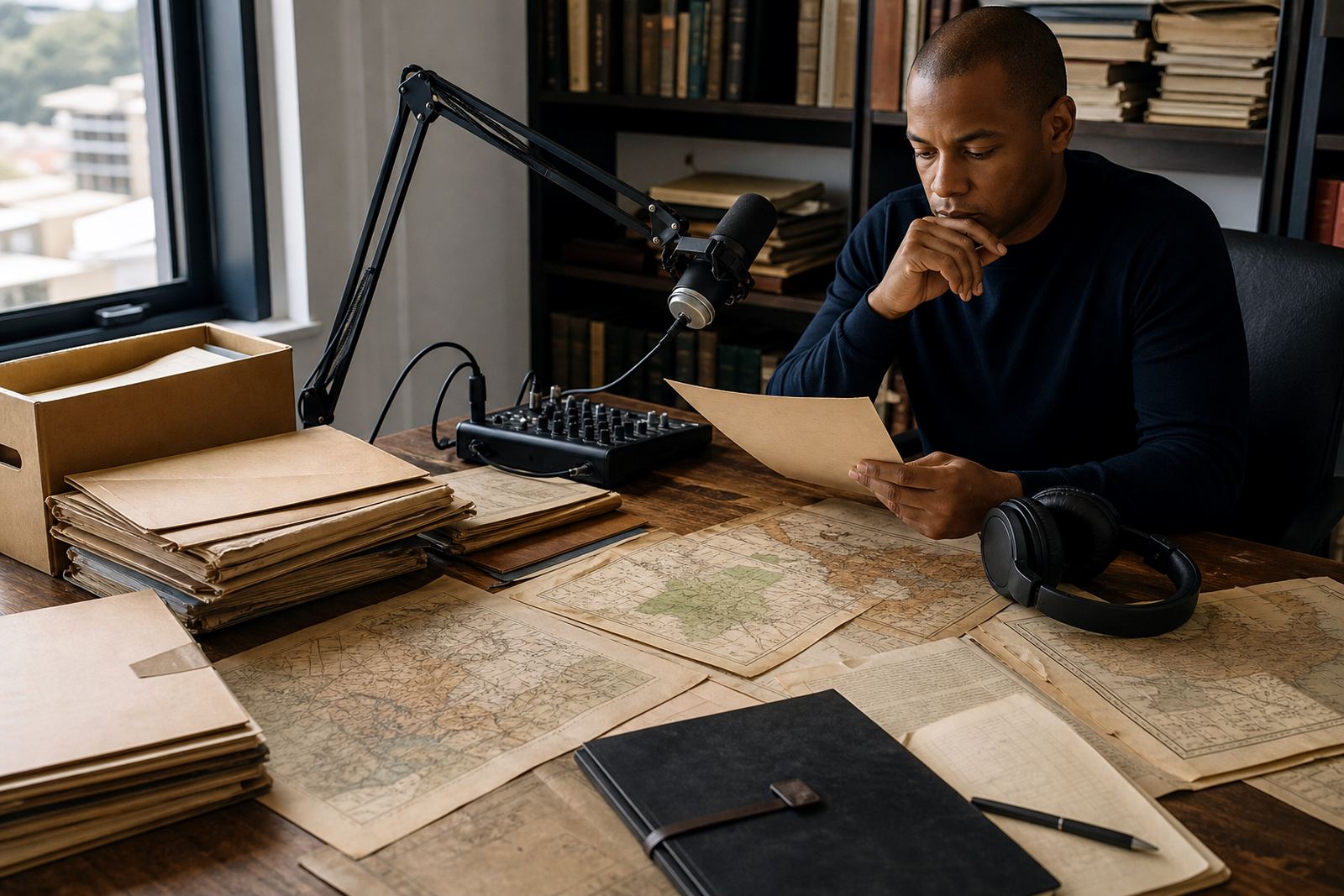
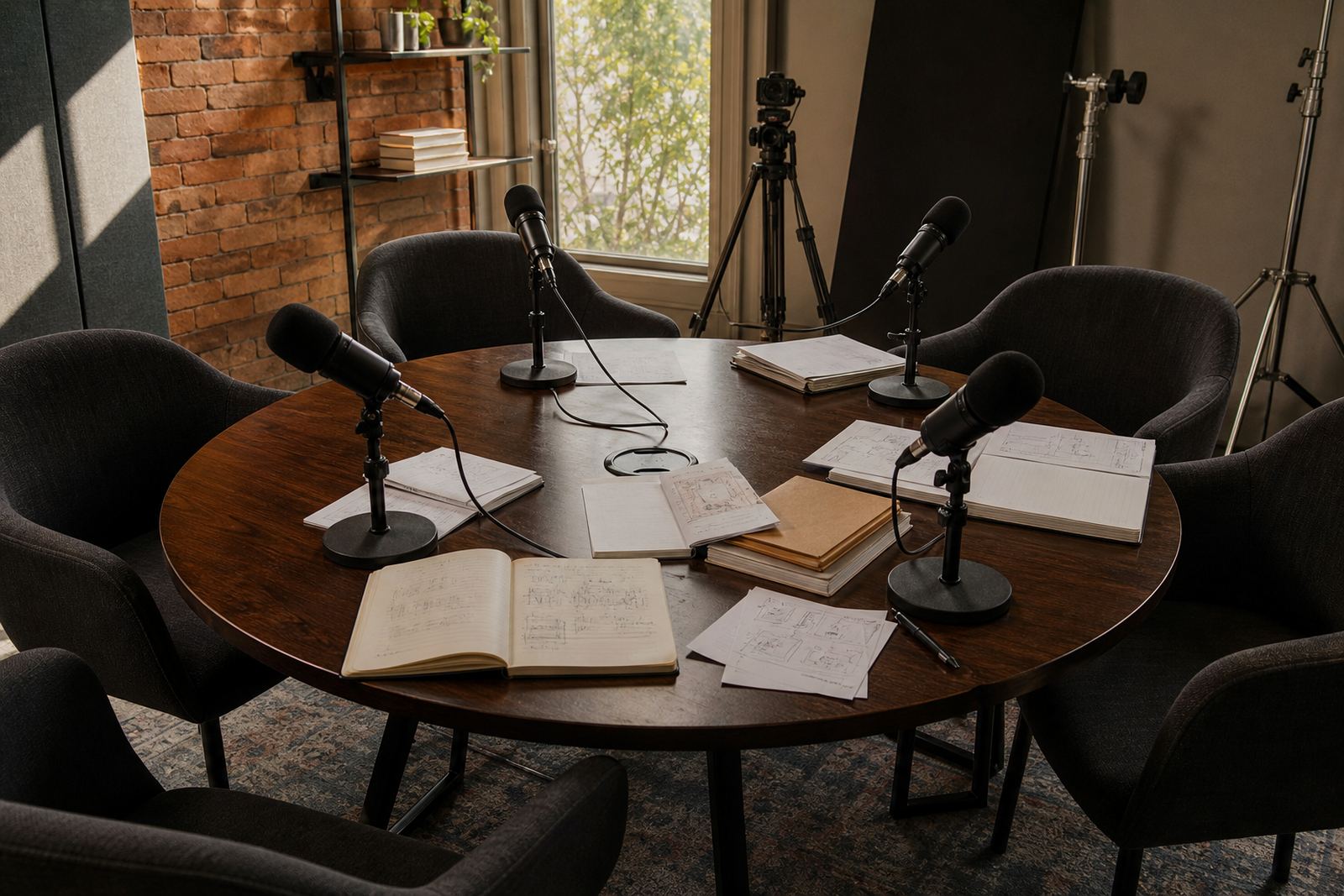
A topic like this does not need heavy equipment, but it does need reliable recording and careful editorial control. A small team can produce strong episodes with a quiet room, two microphones, headphones, basic acoustic treatment and a secure editing workflow.
- Two or more broadcast quality microphones for host and co-host work
- Closed-back headphones for monitoring during recording and edit checks
- Audio interface or recorder with battery backup for power cuts
- Pop filters, mic stands and simple acoustic panels or heavy curtains
- Editing software for episode editing, audio mastering and show notes
- Cloud or local storage for archive management and version control
For a business like Populism Africa Review, the right set-up is not about fancy gear. It is about dependable sound, clean files and a process that lets the team focus on ideas rather than technical problems.
How to plan episodes and essays around identity themes
The strongest identity politics content follows a clear structure. Start with the question, define the term carefully, then explain the historical background and current institutional setting. That may include electoral systems, census categories, federal arrangements, language policy, local government, or the role of courts and commissions. A short case study can help, but it should never turn into a simple blame story.
Good planning also means deciding whether each episode is meant to explain a concept, compare countries, or unpack a specific event. A series on national belonging might begin with ethnicity and voting, then move to language in education, then religion in public debate, and finally citizenship and migration. This keeps the series connected while still allowing each episode to stand on its own.
- Use a fixed outline so every episode has context, analysis and a clear conclusion
- Prepare sources in advance and verify spellings, dates and institutional terms
- Keep language plain, especially when dealing with sensitive group identity issues
- Separate opinion from explanation so the commentary stays non-partisan
- Leave room for regional comparison without flattening local history
The editing stage should check pacing, repetition and factual accuracy. It also helps to write show notes that define key terms for listeners who may be hearing them for the first time.
Common mistakes that weaken identity politics content
The biggest mistake is treating identity as the whole story. In practice, identity interacts with class, urban-rural change, patronage, unemployment, institutional trust and access to public services. Another common problem is using one country as if it represents the entire continent. Africa is not one political pattern, and audiences notice when analysis feels rushed or imported.
A second mistake is to use loaded language that implies every identity-based claim is divisive. That leads to shallow commentary. A careful producer will show that identity can be used for mobilisation, inclusion, protest, protection or exclusion depending on the context. The point is to examine the mechanism, not to moralise from a distance.
There is also a technical mistake that matters: poor editing. Bad sound, weak transitions and incomplete fact checking make a serious subject feel careless. In a busy newsroom or small publishing team, that can happen easily if the archive is untidy or the schedule is too tight.
- Avoid generalising about ethnic groups, religions or language communities
- Do not invent statistics, quotes or private claims to make an episode sound stronger
- Do not skip the institutional background, because that is where the real story often sits
- Do not publish without a final fact check on names, dates and places
Budget ranges for a small independent commentary unit
Budgeting depends on whether the work is a simple audio series or a fuller publishing operation with essay editing, publication scheduling and archive management. Ongoing monthly costs for editing, research support and mastering can range from about R12 000 to R35 000, especially if the team is producing regular episodes and written essays.
If the operation needs a stronger workflow with research support, copy editing and a larger archive, the monthly budget can move into the R35 000 to R80 000 range. That would suit a team handling multiple topics, longer essays and scheduled releases across several channels. For work that includes Pretoria, Soweto, Nairobi, Lagos, Accra and Lusaka audiences, travel, remote coordination and additional review time may also need to be added.
Good budgeting also takes practical South African realities into account, including power cuts, back-up storage, and occasional venue hire for recordings outside the office. Coastal humidity is less of a concern in Johannesburg, but it can matter when recording or shipping gear to other regions, so equipment bags and storage should be planned carefully.
How Populism Africa Review handles sensitive topics
Populism Africa Review is set up for independent political commentary through podcasting and essays, with a team led by Thabo Michael Mabuza and supported by Naledi Seakamela, Aisha Daniels, Kwanele Dlamini, Nadia Barnard and Ntando Ndaba. Based in Rosebank, Johannesburg, the team can manage research, editing, show notes, fact checking and archive management with a close eye on clarity and balance.
For a commentary brief, write to Populism Africa through the contact page form with your topic, format and deadline, which keeps the process tidy and formal. That is useful for topics like identity politics, where a careful brief matters more than fast opinions. The best outcome is a series that helps people understand why language, religion, ethnicity and citizenship remain central to political life across Africa, without turning the discussion into noise.