Why public finance needs plain-language commentary
Public finance sounds technical, but it affects transport, health care, schools, policing and local services. A useful commentary page should explain who raises revenue, how budgets are built, where the pressure points sit, and why a fiscal decision in one department can affect another. In South Africa and across the continent, those choices are never only about numbers, they are also about power, priorities and public trust.
For a listener or reader, the best entry point is usually a simple question: where does the money come from, and who decides where it goes? That makes the topic easier to follow whether the issue is a national budget speech, a provincial adjustment, or a municipal spending delay. It also helps keep the discussion non-partisan and focused on institutions rather than personalities.
- Explain revenue sources such as tax, borrowing and grants in clear terms.
- Separate planned spending from actual spending where possible.
- Show how budget choices affect ordinary services in towns and cities.
Typical production set for a public finance episode
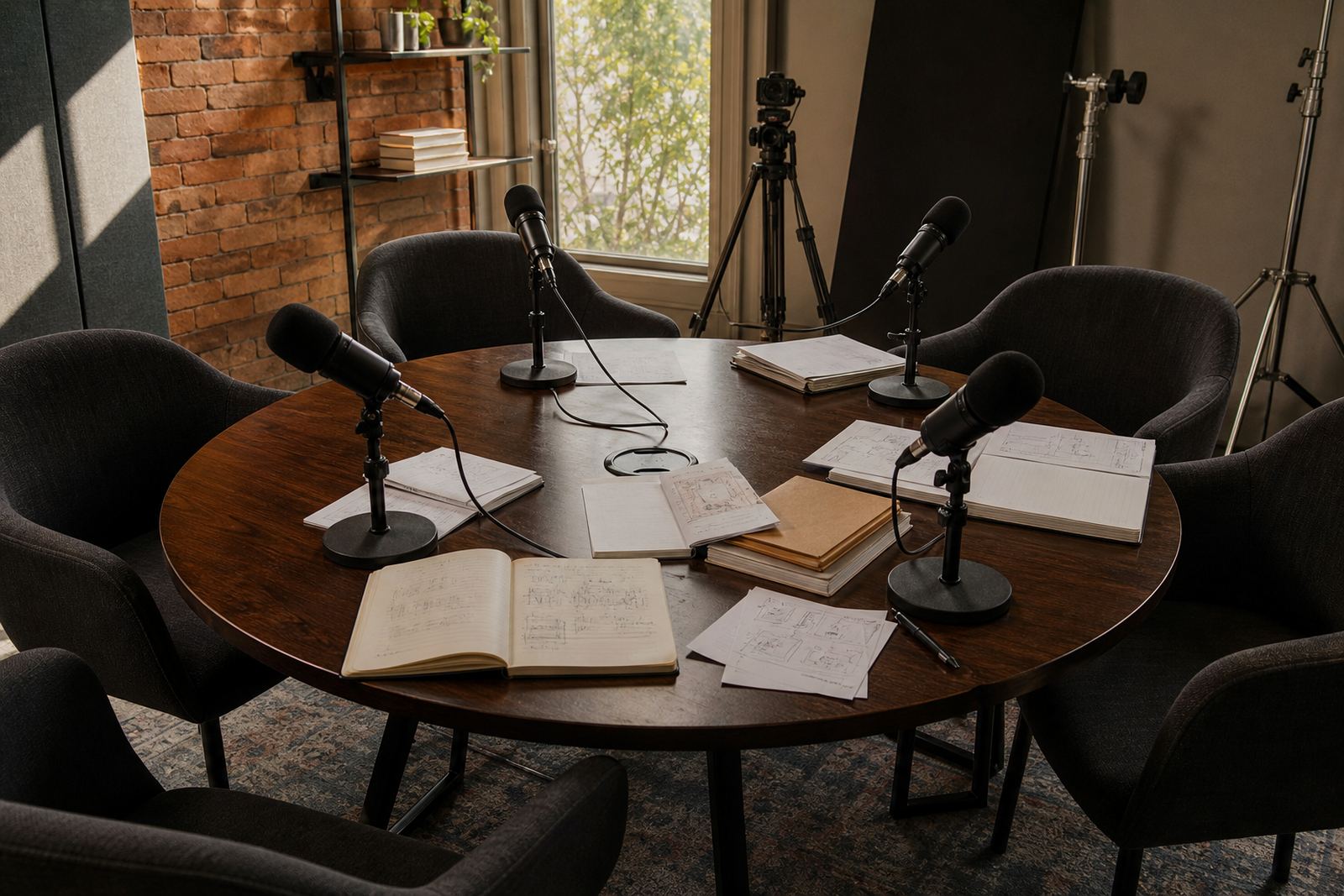
A public finance episode works best with a clean recording setup, steady levels and careful editing. The usual kit is modest, but the detail matters. You need at least two broadcast quality microphones for host and guest discussion, closed-back headphones for monitoring, a small audio interface, a mixer if there are multiple speakers, and reliable backup storage for recordings and notes.
In practical terms, the production plan should allow for a host, one researcher, one editor and someone handling publishing notes and scheduling. If the topic is sensitive, such as municipal procurement or budget cuts, the research lead should verify names, dates and document titles before recording starts. Good public finance content sounds calm because the facts have been checked twice, not because the issue is simple.
- 2 microphones, 2 headsets and one backup recording device.
- Quiet room with soft furnishings to reduce echo.
- Document folder for budget papers, speeches and committee notes.
- Offline backup in case of power cuts or unstable connectivity.
How to plan the episode or essay structure
Public finance content needs a clear outline, especially when the subject moves between budgets, debt, revenue and service delivery. Start with the main question, then move from the broad picture to the specific item under discussion. A short intro should set the policy context, followed by a simple explanation of the mechanism at stake. If the piece covers several countries, group them by theme rather than forcing a country-by-country list that becomes hard to follow.
For essays, the ideal structure is usually five parts: the issue, the institutional setting, the budget line or policy tool, the likely impact, and the unanswered questions. For podcasts, the same flow works with a stronger emphasis on signposting. That helps the audience follow the logic even if the topic includes treasury rules, revenue forecasts or intergovernmental transfers. It also keeps the discussion grounded when the language of finance starts to sound abstract.
- Lead with the question, not the background detail.
- Use one main idea per segment.
- Translate budget language into everyday examples.
Common mistakes when covering budgets and revenue
The most common mistake is treating a budget as a promise rather than a plan. Budgets change through supplementary statements, under spending, procurement delays and shifting revenue conditions. Another mistake is using jargon without explanation, which can make a piece sound technical while leaving the audience unsure what actually changed. A third mistake is mixing politics and analysis so tightly that the reader cannot tell the difference between facts and interpretation.
It also helps to avoid overclaiming from a single document. A finance bill, a speech or a committee brief shows part of the picture, but not always the full one. Good commentary keeps room for uncertainty and notes where further reporting is needed. In public finance, that discipline matters because a small change in wording can alter how people understand spending priorities or tax policy.
- Do not confuse planned allocations with money already spent.
- Do not skip the institutional process behind a budget decision.
- Do not use one figure without explaining the time period and source.
Budget ranges in Rand for this kind of work
For a small commentary operation in Johannesburg or Pretoria, a basic public finance podcast and essay setup can start around R25,000 to R60,000 if the core equipment is bought carefully and the team is lean. That usually covers microphones, audio interface, headphones, basic acoustics and initial editing support. A more developed setup with stronger post-production, archive management and regular research support may sit in the R75,000 to R180,000 range depending on staffing and output volume.
For ongoing monthly work, the budget can vary from about R12,000 to R45,000 for lighter publishing support, or higher where there are multiple episodes, detailed fact checking and long-form essay editing. Coastal humidity in places like Durban is not the same as the dry air in Gauteng, so storage, cabling and room treatment need a bit of planning too. A sensible budget leaves room for power backup, file storage and revision time because public finance work tends to need careful rechecking.
A practical budget line should also include the less visible costs: archive filing, show notes, publication scheduling and final audio mastering. These tasks are easy to underestimate until a busy news cycle, municipal deadline or budget vote lands all at once.
Where budgets meet daily life
Public finance is one of the few topics that connects daily life to state decision making in a direct way. People may not follow every policy term, but they do notice when transport funds are delayed, when clinics face shortages, or when a municipality struggles to maintain water and roads. That is why this subject benefits from steady, explanatory commentary instead of reaction alone.
The aim is to explain how budgets work across Africa without reducing them to slogans. That means careful language, a clean editorial line and enough context to show why a spending decision matters. Strong public finance coverage does not tell the audience what to think, it gives them the tools to follow the money and ask better questions.