Why political history matters for current debates
When a topic page covers political history well, it does more than list dates. It explains how constitutions, party systems, local government, courts and public service rules came to be, and why those structures still shape daily politics in Johannesburg, Pretoria and beyond. That kind of context helps audiences understand issues like coalition politics, devolution, state capture, land reform, taxation and civil liberties without jumping straight to slogans.
For a commentary platform, the client situation is usually simple: the audience wants background that is clear, non-partisan and grounded in general knowledge. The work has to read well on its own, but it also needs to support podcast episodes, essays and archive material. In practice, that means the history section should not sound like a school note. It should be written so a first-time reader can follow it, while an informed reader still finds something useful.
How we plan a history-led topic page
A useful history page starts with a clean structure. We normally plan it around one central question, then map the timeline, the institutions involved, the political language used, and the present-day relevance. For Africa-wide coverage, that often means comparing how independence, military rule, constitutional change, liberation politics and multiparty systems took shape in different countries.
- Opening frame: define the period or idea in plain language.
- Timeline block: major eras, transitions and turning points.
- Institution section: parliament, presidency, judiciary, election bodies, local councils.
- Language and terms: explain words like populism, patronage, federalism, nationalism and liberal democracy.
- Current link: show how old structures still affect policy and public debate.
A strong outline saves hours later on, especially when the same research feeds both an essay and a podcast script.
Typical production set for a history commentary series
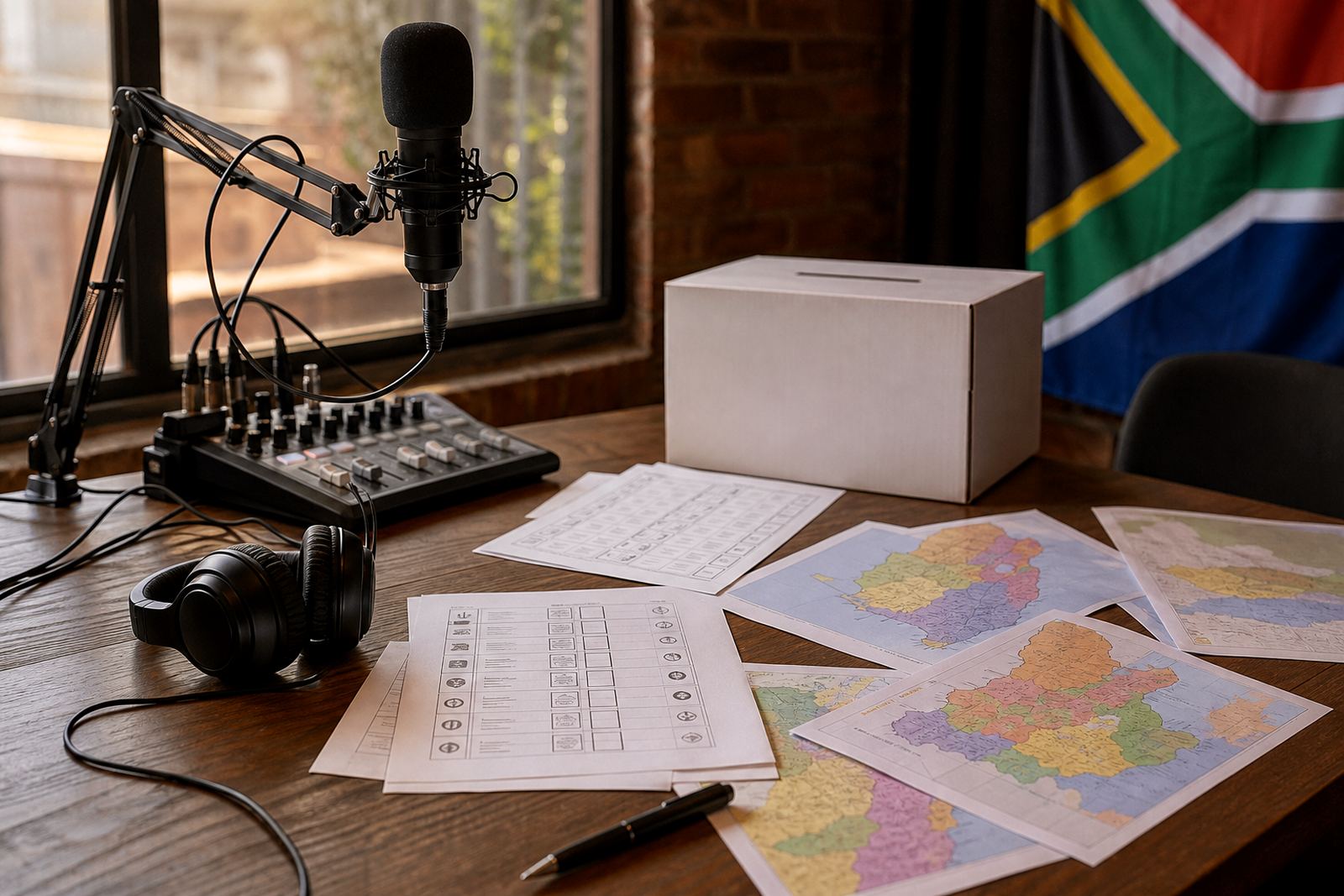
A topic page on political history usually sits alongside a small but practical production set. The exact setup depends on whether the team is recording in studio, at home, or on the move between Johannesburg and other cities, but the core needs stay much the same.
- Two to four microphones for interviews or panel recording
- Headphones for monitoring speech and background noise
- Audio interface or compact mixer
- Recorder or computer-based editing workstation
- Backup storage for scripts, audio files and archive notes
For a publisher based in Johannesburg, that setup should be built for reliability more than flash. Coastal humidity in places like Durban is not the issue in Rosebank, but dust, heat and power interruptions still affect audio quality and file safety. A sensible setup keeps the work moving, even when a session needs to be rescheduled at short notice. Small teams often think they need more equipment than they do, when in reality they need better planning and clean file handling.
Editing for clarity, accuracy and tone
History content is easy to overcomplicate. Editors need to watch for long sentences, repeated points and language that sounds certain when the evidence is still contested. The aim is not to flatten debate, but to keep the writing accurate and readable. That matters especially when explaining the history of political movements, constitutional transitions and state institutions across South Africa, Kenya, Nigeria, Ghana and Zambia.
Fact checking is a major part of the job. Dates, office titles, constitutional changes and institutional names need to be checked against reliable general references. If a page mentions a historical reform or a political shift, it should make clear whether it was gradual, disputed or incomplete. We also look for accidental present-day bias, where an old event is described using terms that only make sense now.
- Check every date and office title before publication
- Keep names of institutions consistent across sections
- Avoid overloading the page with jargon
- Use examples that explain, not decorate
Common mistakes on politics and history pages
One common mistake is treating all African political histories as if they followed the same path. That leads to thin writing and weak analysis. South Africa's transition, for example, cannot be explained in the same way as Nigeria's federal system or Zambia's post-independence party history. Each case has its own institutions, pressures and public language.
Another mistake is overusing modern commentary in place of history. The best pages connect past and present, but they do it carefully. They also avoid making claims about current politicians or parties unless the content is general and non-partisan.
- Do not collapse different countries into one broad story
- Do not turn historical explanation into opinion
- Do not skip the role of institutions
- Do not use vague labels where clear terms are available
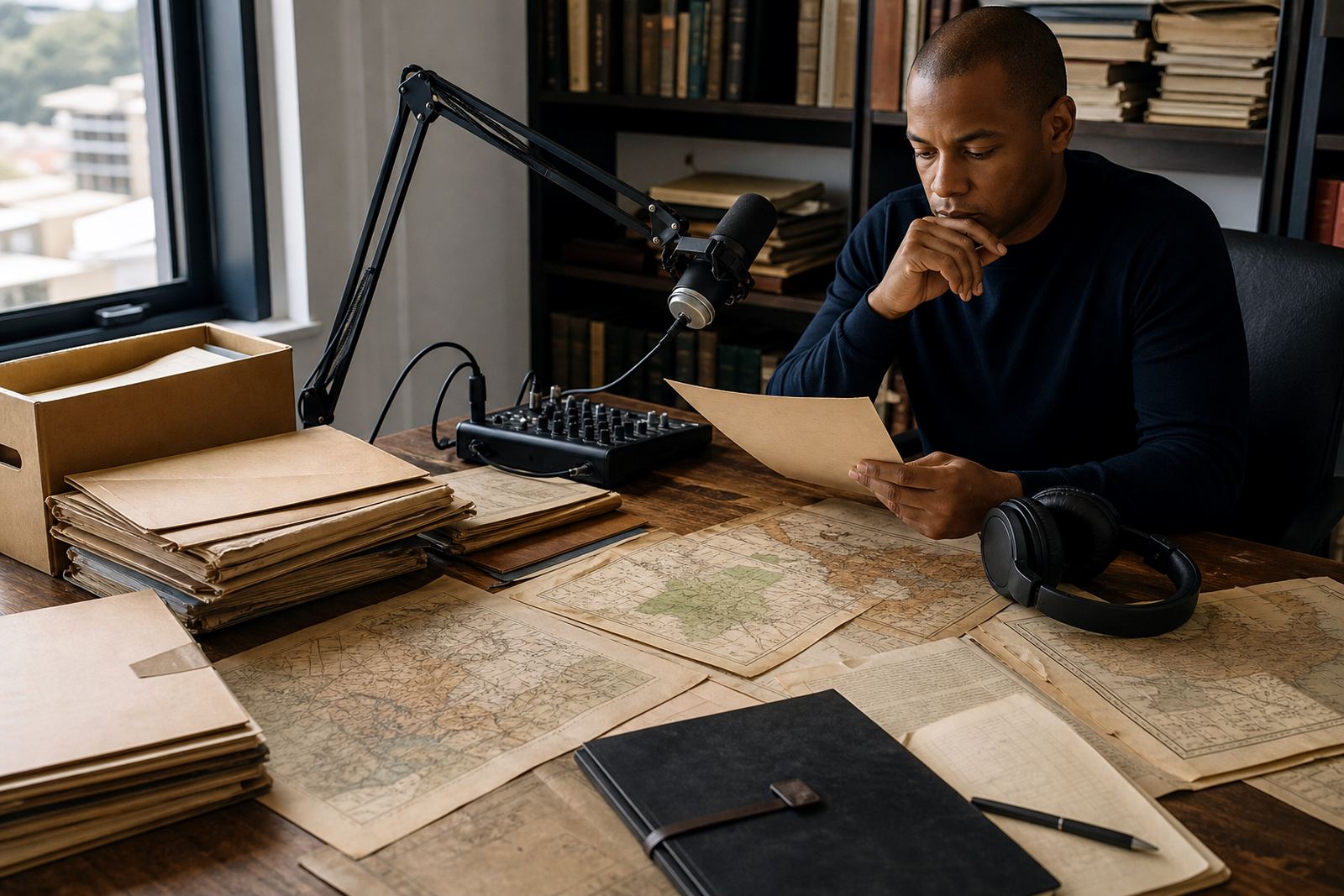
Another practical issue is archive management. If older essays, scripts or notes are not filed properly, the same research gets repeated and errors creep in. A tidy archive helps the team reuse background material without losing track of revisions.
Budget ranges for a history and commentary package
Budget usually depends on how much research, editing and audio work is needed. For a small topic page with one essay and light podcast support, a modest range might start around R8 000 to R15 000. A fuller package, with research support, script development, fact checking, show notes, copy editing and publication scheduling, can sit between R18 000 and R40 000, depending on length and turnaround.
For a larger series that includes multiple essays, archive management and ongoing audio mastering, the budget can rise further. The key is to price the work by output and complexity, not by guesswork. A page that has to carry a whole historical argument usually takes more time than a simple news summary, and that should be reflected in the quote.
For teams in Gauteng or working across Nairobi, Lagos, Accra and Lusaka, it often makes sense to start with a pilot package. That gives enough material to test tone, structure and workflow before committing to a bigger series.
How political history informs analysis
Political history sits between education and analysis. Background on electoral systems, constitutional design, liberation movements, executive power, local government and state reform makes recurring issues easier to follow and discuss with context.
At Populism Africa Review, the work is shaped by a practical editorial process led from Rosebank, Johannesburg. The team can support podcast production, episode editing, research support, essay editing, copy editing, audio mastering, show notes, series planning, publication scheduling and archive management. That means the history page is not treated as a one-off article. It becomes part of a wider publishing system that keeps the commentary consistent and accessible, with a bit of room for the writer's own voice too.
Clients reach us through the enquiry form on the contact page, and the first step is usually a plain brief: topic, length, audience and deadline. From there, coverage can be planned for a local South African audience or for people across the continent who want clear political history without noise.