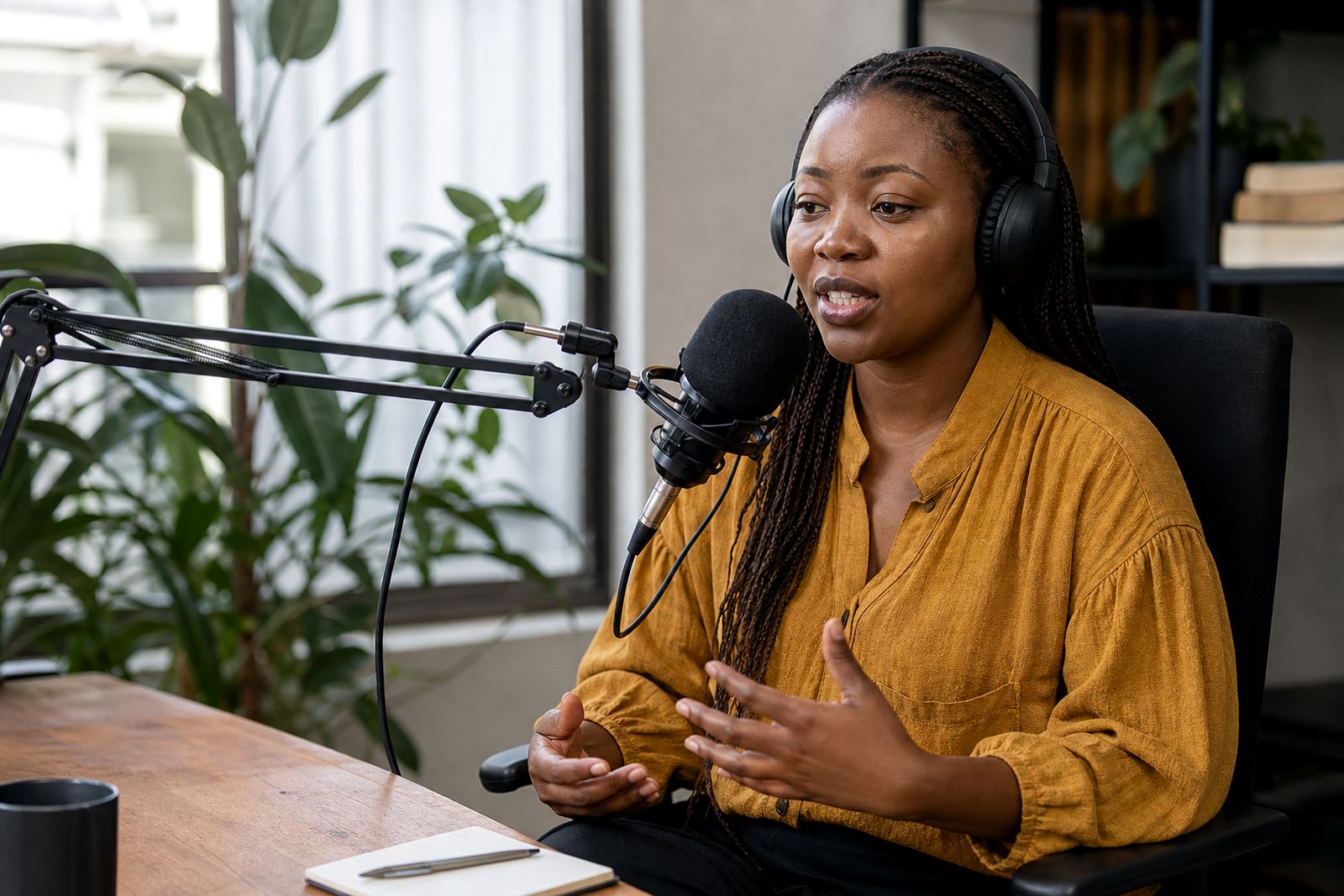
What to send us in your topic suggestion
For a commentary brief, write to Populism Africa through the contact page form with your topic, format and deadline to tell us what you want covered. The most useful suggestions are specific: name the country, the institution, the period or the political idea you want explained, and say why it matters to you now. We read every submission carefully and use them to shape future episodes and essays.
If you are unsure how to frame your idea, start with a broad question and let us narrow it down. A topic can be as simple as a constitutional court, coalition government, decentralisation, state-owned companies, election management or the history of a liberation movement and its place in public life.
- Country or countries you want covered
- The theme, institution or time period
- Why it matters to you or your organisation
- Whether you prefer a podcast episode, essay, or both
How to write a useful request
A strong suggestion helps us understand the angle you are after. If you want a historical topic, mention the decade or turning point. If you want an institutional topic, say whether you need the basics, the legal framework, or the practical effects for citizens. That helps us prepare a clear script and a well structured explainer.
For example, you might ask for an overview of how local government works in South Africa, the role of electoral commissions in multi-party systems, or how federal and unitary systems differ across the continent. Keep it simple and practical. A few sentences is enough and it helps a lot.
- Explain what you already know, if anything
- Say whether the focus should be historical or current
- Note if you want comparisons across South Africa, Kenya, Nigeria, Ghana or Zambia
- Flag any glossary terms or concepts you want unpacked
What we can cover in the series
Our coverage focuses on political ideas, institutions and historical themes, not campaign slogans or partisan argument. We can explain how constitutions are made, how parliaments function, how budgets pass through government, how oversight bodies are meant to work, and how political parties evolved in different national settings. We also handle themes such as patronage, civic participation, decentralisation, coalition politics and media freedom.
Where helpful, we compare similar ideas across countries, while keeping the explanation grounded in each nation’s own history and legal system. That means a topic on devolution in Kenya can sit beside a piece on provincial government in South Africa or local administration in Ghana, without forcing false comparisons.
What happens after you submit the form
Once your suggestion reaches us, the team reviews it for clarity, relevance and fit with our editorial calendar. Naledi Seakamela leads editing, while Kwanele Dlamini checks the research angle and Thabo Michael Mabuza reviews the final editorial direction. If we decide to take it further, we may shape it into an essay, a podcast episode, or a short series.
Not every suggestion will go live straight away. Some topics need more background work, and others may be grouped with related ideas so we can cover them properly. We keep the process orderly because good political commentary needs facts, context and enough time to get the detail right.
- We assess the topic for relevance and clarity
- We decide whether it suits audio, print, or both
- We map the research needed before production
- We place accepted topics into the scheduling queue
Research, fact checking and editorial standards
Every topic we take on is handled with care. Our research support and fact checking process is designed to keep the discussion grounded in public information, academic sources, legal texts and established historical records. We do not publish fabricated claims, and we avoid speculation about living politicians, parties or election outcomes.
Our audience spans Johannesburg, Pretoria, Soweto, Nairobi, Lagos, Accra, Lusaka and beyond, so each piece is written to make sense across different political contexts. The goal is to explain institutions clearly, not to tell people what to think. That means plain language, careful definitions and enough background to make the subject useful.
Tips for contacting editorial
If you want your suggestion to move smoothly through the queue, keep it direct and relevant. Mention the core issue in the first line, then add a little context. If the topic has a strong time marker, such as a constitutional review, a major reform or a historical anniversary, include that too. It helps us work out whether the piece should be topical or evergreen.
Good suggestions usually answer three things: what the topic is, why it matters, and what format you want. If you are an academic, civic group, newsroom or reading circle, you can also say how you intend to use the content. That gives us a better sense of tone and length.
- Be specific about the country and theme
- Keep the wording short and clear
- Say if you need a general explainer or a deeper analysis
- Use the contact form only, so we can track your request properly