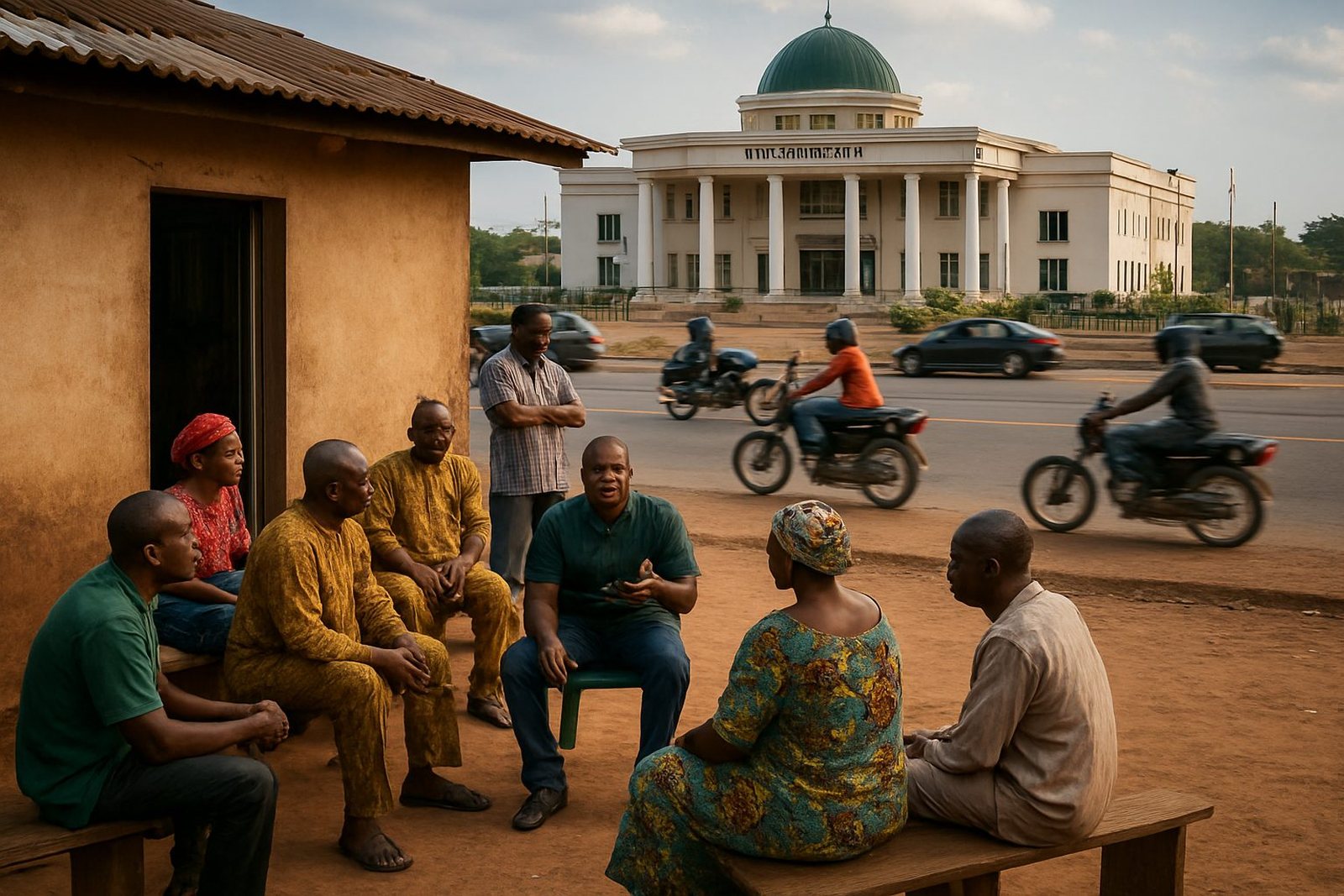
What this episode covers
Courts and Democracy is a focused podcast episode that breaks down how judges, constitutional rules and public institutions fit into everyday political life. It explains why courts matter when voters, parliaments and executives disagree, and why public confidence in the justice system can rise or fall over time. The episode keeps to general political ideas and institutional history, so it is suitable for listeners across South Africa, Kenya, Nigeria, Ghana and Zambia.
The format is clear and practical, with a steady pace for audiences who want ideas explained without jargon. It looks at judicial independence, the role of constitutional review, and the difference between legal authority and political power. That makes it useful for students, civic groups, newsroom teams, community listeners and anyone trying to understand how democracy is tested in real life.
- Judicial independence and why it matters
- Constitutional review and limits on power
- Public trust in courts and institutions
- How court decisions affect political life
Episode formats and listening options
This episode is available as a standard audio release or as part of a wider political series. It can be scheduled as a single standalone edition, or slotted into a themed run on democracy, governance and public accountability. For organisations planning repeat listening, the episode also works well as a short series opener, because it sets out the core ideas before moving into country-specific cases.
Length and structure can be adjusted to suit different listening needs. A shorter cut suits radio-style listening and quick publication, while a longer version gives more room for examples and explanation. Show notes can be added as a summary after listening. There is no fixed sample size in the usual sense, but the episode can be packaged in 15 minute, 25 minute or 40 minute listening formats depending on the publishing plan.
- 15 minute short cut for quick listening
- 25 minute standard episode for general audiences
- 40 minute extended version for teaching or discussion
- Optional show notes for each release
Where it suits best
Courts and Democracy suits listeners who want a calm explanation of political institutions without party language or campaign noise. It works well for university seminars, civic education groups, newsroom briefings, public policy discussions and podcast feeds that focus on governance across Africa. Because the subject is broad, it travels well across different countries and is easy to pair with episodes on elections, constitutions, corruption or separation of powers.
The episode is also practical for audiences in Johannesburg, Pretoria, Soweto and Gauteng more widely, as well as listeners in Nairobi, Lagos, Accra and Lusaka. In cities where people are following court rulings closely, the episode gives a grounded way to think about the role of judges, legal review and constitutional limits. It is especially useful where public debate becomes noisy and people need a simple framework to make sense of the issues, not more heat.
Research, editing and fact checking care
This episode needs careful research support because the topic involves law, public institutions and long-running constitutional ideas. Fact checking should confirm the wording of general legal concepts, the names of institutions where relevant, and the meaning of terms such as judicial review, separation of powers and constitutional supremacy. It is best to avoid overstatement. Courts can check power, but they do not solve every political problem, and the episode should say that plainly.
Editing should keep the tone measured and accessible. That means removing unnecessary legal language, tightening long explanations and making sure each section flows from one point to the next. Show notes can help listeners follow the structure, while archive management keeps the final file easy to find later. If the episode is used in a series, the publishing schedule should also be planned early so related releases remain in order.
Before you commission a piece
Before confirming the episode, check the target audience, length, tone and whether the final version should focus more on courts, public trust or constitutional review. It also helps to confirm if the publication should remain general across Africa or lean slightly toward one national context. The brief should state whether the piece is for first-time listeners or a more informed audience, since that changes how much background is needed.
Also confirm who will sign off on the script, whether copy editing is needed after research notes, and whether the finished episode should include short introductory and closing lines for a podcast feed. If the piece is being planned for multiple branches or regions, make sure the location names are final, because audience references should stay consistent throughout the release.
- Target audience and listening level
- Preferred length and release format
- Level of background detail needed
- Sign-off process and publication date
Key facts
| Type | Independent political commentary podcast episode |
|---|---|
| Topic | Judicial independence, constitutional review and public trust in courts |
| Format options | 15 min, 25 min or 40 min listening cuts |
| Regions covered | South Africa, Kenya, Nigeria, Ghana and Zambia |
| Production services | Podcast Production, Episode Editing, Research Support, Fact Checking, Audio Mastering |
| Publishing support | Show Notes, Series Planning, Publication Scheduling, Archive Management |