Why state symbols matter beyond ceremony
Flags, anthems and seals are often treated as background detail, yet they sit at the centre of public life. They appear on passports, court buildings, school assemblies, border posts and presidential events, where they signal continuity and authority without saying a word.
In practice, symbols help a state project unity across language, class and region. That matters in countries shaped by colonial rule, liberation politics and contested national identity. A flag can be a promise of shared citizenship, but it can also be used to cover weak institutions if leaders rely too heavily on ceremony and not enough on service delivery.
What flags are meant to communicate
A national flag is not only decoration. Its colours, shapes and order of design are chosen to communicate a story about the country. Some flags stress liberation, some stress geography or natural resources, and some aim for a clean break from an old political order. The symbol is public, but the meaning is always negotiated by citizens over time.
For South Africans, the current flag is often read as a sign of convergence after division. In a city like Johannesburg, it is visible at municipal offices, sports grounds and public events, where people from many communities encounter the state in the same visual language. That does not erase political disagreement, but it gives the public a shared sign to gather around.
- A flag should be recognisable from a distance and simple enough to reproduce correctly.
- Its use must be consistent across schools, offices and official events.
- When it is displayed badly, the state looks careless, even before anyone reads a policy document.
Anthems and the politics of belonging
Anthems do a different kind of work. They are not seen from afar, they are heard in moments of collective attention. A national anthem asks people to stand still, listen and recognise that the state claims a shared public space. In multilingual societies, the language choice and the order of verses can matter almost as much as the melody.
That is why anthem debates often become debates about inclusion. If a song feels too tied to one historical group, others may experience it as a reminder of exclusion. If it is too abstract, it may fail to carry memory or common purpose. The balance is delicate and often political, even when the discussion is framed as cultural.
In schools, civic events and sporting fixtures, the anthem also teaches protocol. Children learn when to rise, when to remove caps and how to behave in a public institution. These are small acts, but they shape the habits through which people encounter authority.
How symbols can strengthen institutions or weaken them
When symbols are linked to real public institutions, they can support trust. A clean court building, a properly flown flag and a carefully delivered oath all suggest that rules matter. But if the symbol is used to hide corruption, poor planning or patronage, the effect is the opposite. People quickly notice when the ritual looks polished and the institution is not.
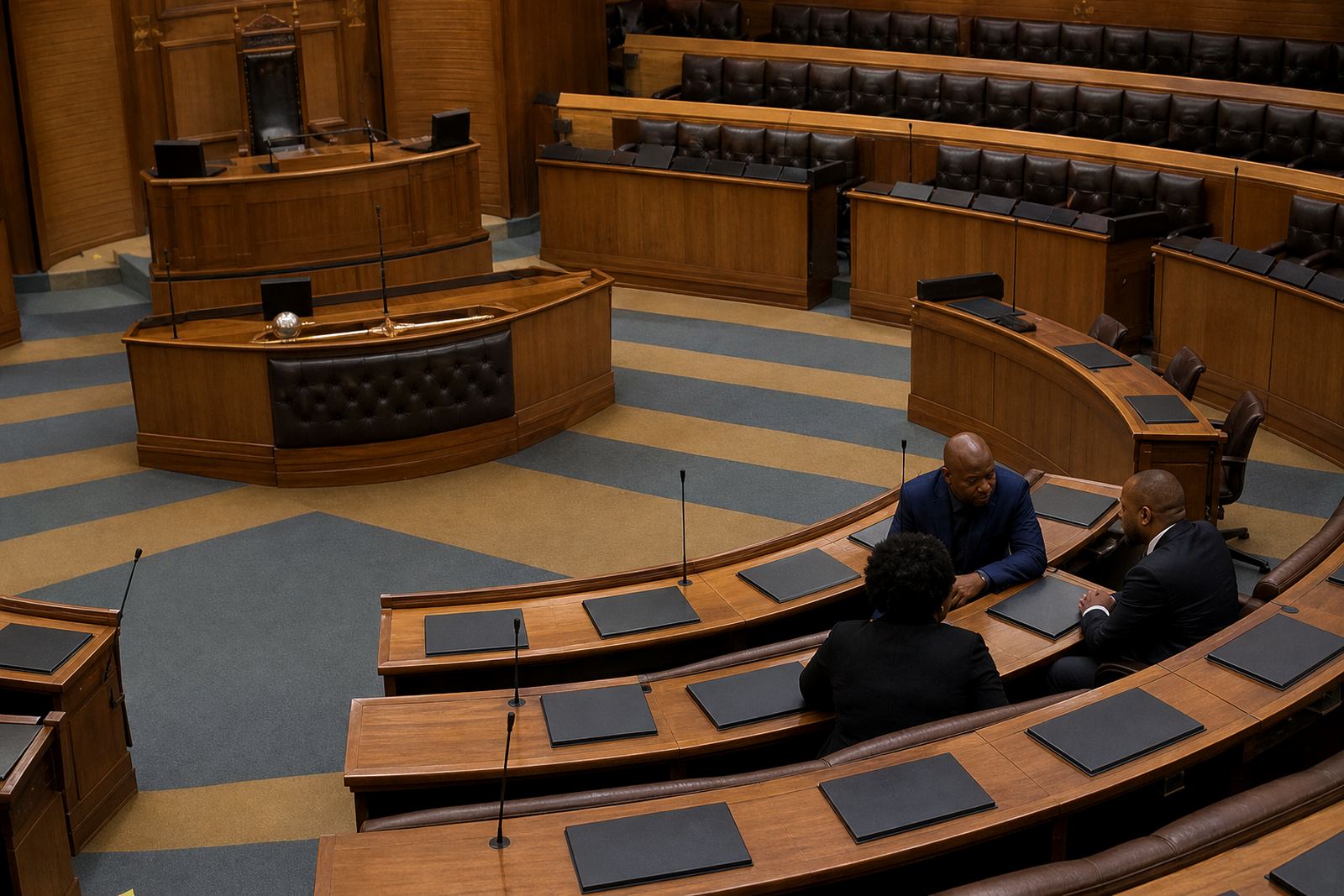
This is where practical discipline counts. Municipal offices, provincial departments and national institutions should treat symbols as part of service standards, not as a separate layer. If a council hall is draped correctly but the permit process takes months, the symbolism becomes thin. Citizens are not fooled for long, even if the speeches are loud.
- Keep flags in good condition and replace faded or torn ones promptly.
- Use the correct anthem, seal and protocol for each institution.
- Train staff on basic civic etiquette so public events do not become embarrassing.
- Match ceremony with delivery, otherwise the state looks all hat and no cattle.
A Johannesburg example: ceremony in a working city
Johannesburg shows how state symbolism sits alongside daily pressure. The city carries the markings of local government, provincial authority and national presence, often in the same street. On a busy weekday in Rosebank or central Johannesburg, you can see the distance between official symbolism and real public demand in a matter of minutes. The flag may be flying at an office, while residents queue elsewhere for a basic response.
That gap matters because public symbols are seen by people who are trying to get something done. If a line of citizens waits in a municipal building while the presentation on the wall looks immaculate, the message is mixed. The symbol says order, but the service says delay. In places with load-shedding, potholes, water interruptions and slow admin, citizens read that gap very quickly.
The lesson is not to abandon ceremony. It is to make sure the ceremony points toward functioning institutions. A state that wants respect must first earn it through ordinary work, not only through uniforms and music.
Reading symbols without becoming cynical
It is easy to dismiss symbols as empty. That would be a mistake. Symbols matter because they frame how people imagine the state, and those shared images can support constitutional order, public memory and national belonging. The better approach is to read them critically, not casually.
Ask three simple questions whenever a flag, anthem or official seal appears in public:
- What idea of the nation is being presented here?
- Who feels included, and who may feel left out?
- Does the institution behind the symbol act in a way that matches the message?
Those questions are useful in classrooms, council chambers and newsroom discussions alike. They help citizens move from passive observation to informed judgement, which is exactly what civic life needs.
The real test of political symbolism
The strongest symbols are not the loudest ones. They are the ones that keep meaning something after the ceremony ends. A flag should remind people of shared citizenship, an anthem should carry public memory, and state authority should be visible in actions, not only in ritual.
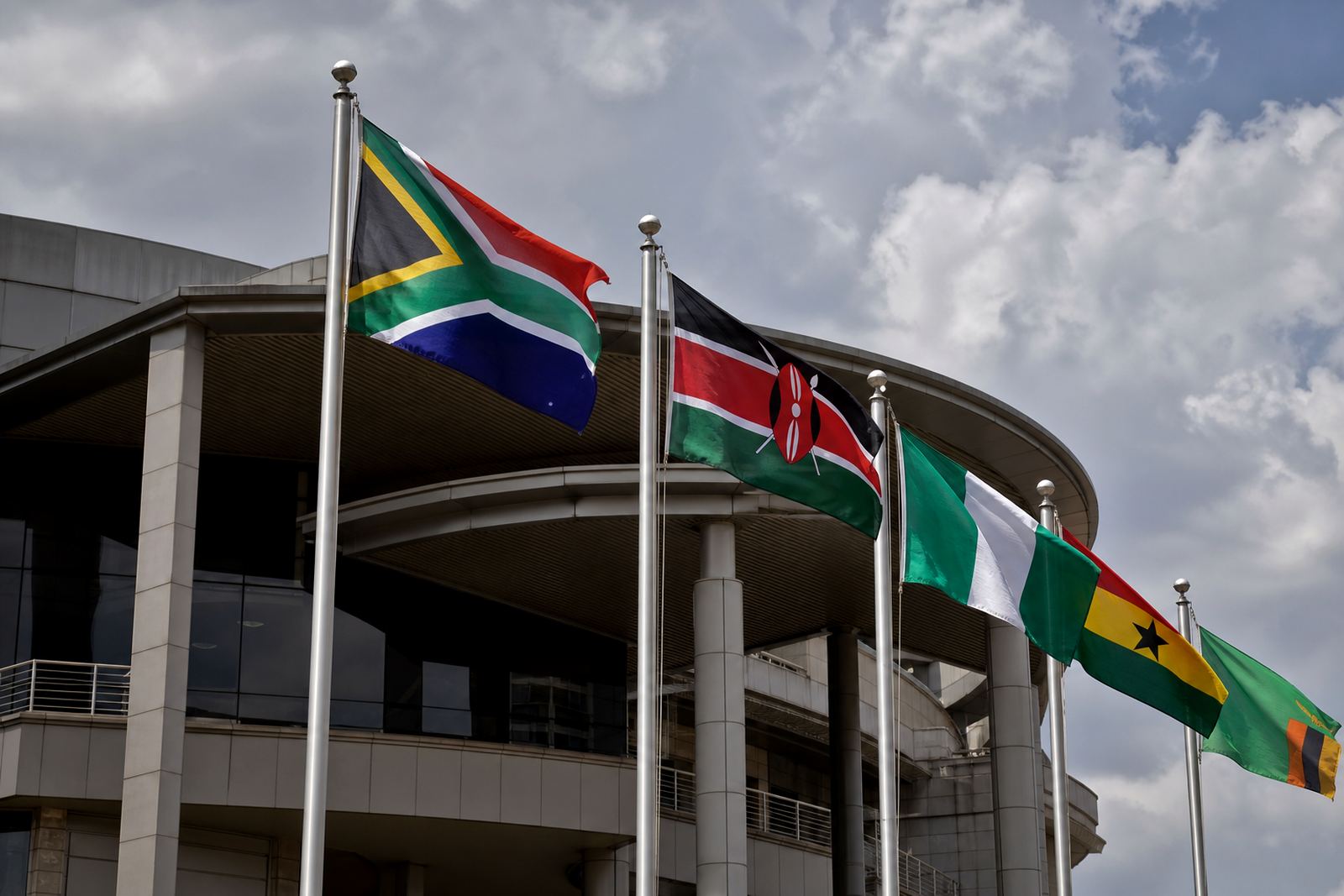
Across Africa, from South Africa to Kenya, Nigeria, Ghana and Zambia, political symbols remain part of how governments speak to their people. The challenge is to keep that language honest. When symbols are grounded in decent institutions, they carry weight. When they are used to cover weakness, they become thin very quickly.
That is why serious commentary on politics must pay attention to the visual and ceremonial side of power. It is not a side issue, it is part of how states teach citizens what to expect from authority.