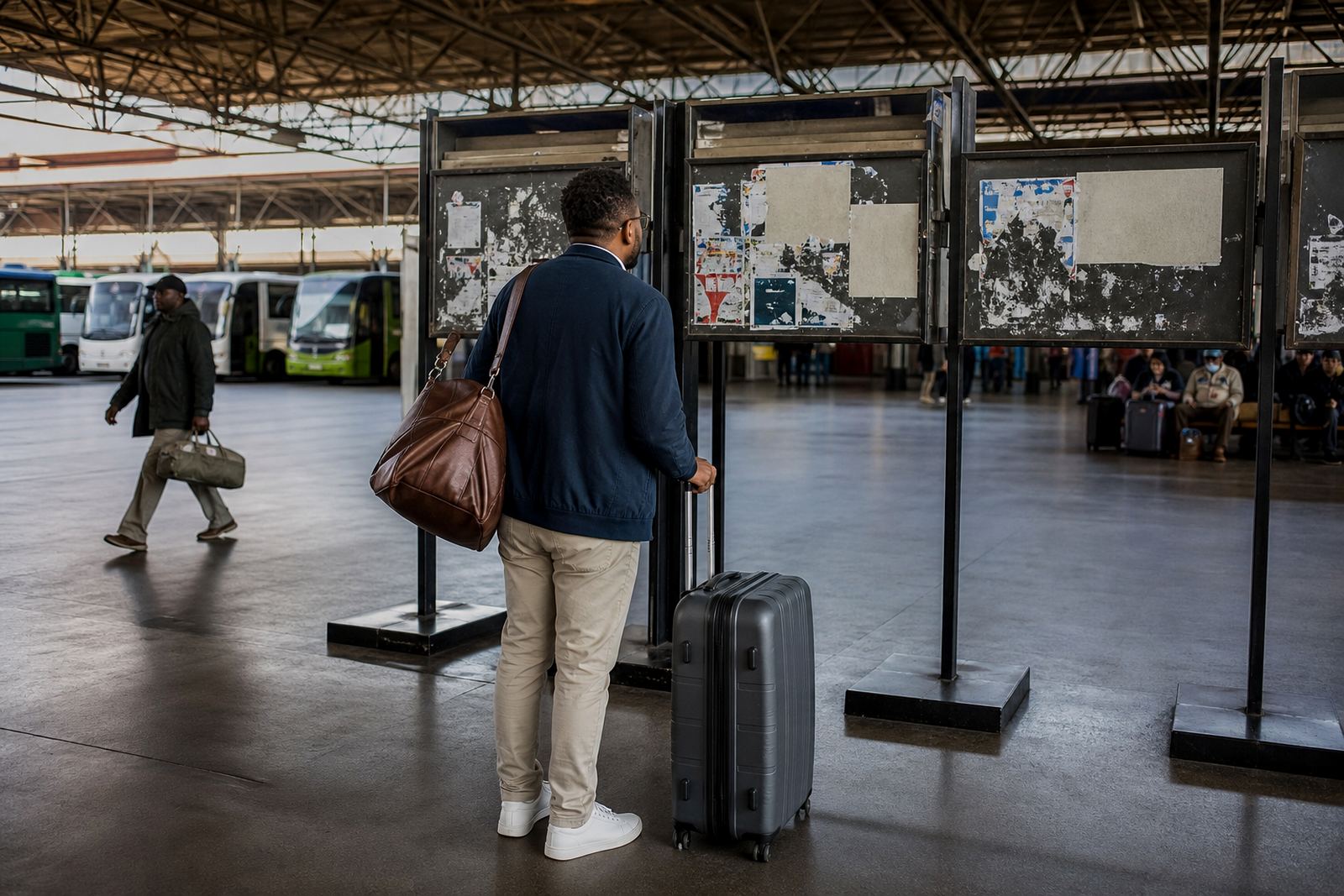
Why movement changes the political conversation
Migration is often discussed as a crisis, but it is better understood as a normal part of political life. People move for work, family, study, safety and land pressure, and each of those reasons brings pressure onto housing, schools, transport and local services. When cities grow quickly, elected leaders and municipal officials have to decide who gets what, where and when. That is where politics enters everyday life.
In South Africa and across the continent, movement also changes the language of belonging. Some people are born in a city and others arrive later, yet both groups depend on the same roads, clinics and libraries. The real issue is not whether people move, but whether public institutions can plan fairly for that movement.
- Migration affects rent, transport queues and informal trading spaces.
- It can change voting patterns, ward priorities and local public debate.
- It often exposes gaps between constitutional rights and service delivery on the ground.
Johannesburg as a case study in arrival and strain
Johannesburg is a useful local example because it draws people from across Gauteng, other provinces and the wider region. Rosebank, the inner city, Soweto and surrounding suburbs all show different versions of the same pattern: people come for opportunity, then settle where they can manage the cost of living. A young worker may share a room in the inner city, while a family may move between township rentals and backyard units as income changes.
This movement creates political questions that are practical, not abstract. Are public transport routes reliable at the times people actually travel? Are clinics close enough to growing settlements? Do ward committees and councillors hear new residents as well as long-time residents? These questions shape trust in local government more than speeches do. And when services fall short, frustration is often aimed at the nearest visible person, not the deeper planning failure behind the problem.
- Population change affects refuse collection, policing and water pressure.
- Short-term rentals and backyard rooms can widen pressure on local infrastructure.
- Clear communication from municipalities matters when residents do not share the same home language.
Belonging is political, not only emotional
People often treat belonging as a feeling, but in political terms it is tied to rights, documents and access. A person may live in a neighbourhood for years and still struggle to access some services because of proof-of-address requirements, administrative delays or unclear municipal systems. That tension can become sensitive in places where people assume newcomers receive more attention than long-term residents, or where long-term residents believe newcomers do not respect local norms.
The better political question is how to build common rules that are fair to everyone. Municipal systems should not depend on rumour or favour. They should depend on clear criteria, published processes and local accountability. When people understand how to register a complaint, apply for a service or attend a public meeting, belonging becomes less fragile.
For civic groups, churches, residents associations and local media, the practical task is to explain institutions in plain language. If people know how the ward system works, how a council budget is passed and what a public hearing can actually change, they are less likely to feel shut out.
What history teaches about movement and power
African political history is full of migration stories. Labour migration shaped mining towns in South Africa, port cities across West and East Africa, and the growth of regional commercial hubs. Colonial borders often split language groups and family networks, while post-independence economies pulled workers toward cities with more jobs. That history matters because present-day tensions are often inherited from old patterns of uneven development.
When governments fail to spread opportunity across regions, people move toward the few places that offer hope. That can enrich a city, but it also places pressure on housing and public order. The answer is not to shut movement down. It is to plan for it better, by investing in secondary cities, improving rural services and making urban land use more transparent. Without that, migration becomes a stand-in for deeper policy failure.
There is also a regional lesson here. South Africa, Kenya, Nigeria, Ghana and Zambia each have their own migration pressures, but the underlying debate is similar: how do institutions respond when population shifts faster than planning? That question cuts across local government, national policy and cross-border cooperation.
How to talk about migration without slipping into blame
Public discussion can become careless very quickly. People start with real concerns about overcrowding or jobs, then slide into stereotypes about where someone comes from. That is poor political thinking and it muddies the real issue. Good commentary should distinguish between pressure on services and the temptation to blame neighbours.
For anyone covering this topic in a podcast, essay or public forum, a steady method helps. Use specific examples, define terms carefully and avoid turning isolated incidents into a theory of whole communities. A single example from a taxi rank or municipal office does not explain the whole city, and it should not be treated as proof of a grand pattern.
- Separate service delivery problems from identity claims.
- Use verified information about laws, local processes and public budgets.
- Avoid language that turns migrants into a political threat by default.
- Ask who benefits when the debate becomes angry but vague.
Practical lessons for civic leaders and editors
Those shaping political conversation have a simple responsibility: make the issue understandable without making it crude. Editors should explain the institutions involved, from municipal housing lists to border policy and labour regulation. Civic leaders should give residents a way to raise concerns without turning every complaint into a fight over identity. In a city like Johannesburg, that means talking about transit, water, school places and rental pressure in the same breath as questions of citizenship and rights.
There is also room for more careful local storytelling. A neighbourhood meeting in Soweto, a small business discussion in Pretoria or a transport conversation in Rosebank can show how movement affects daily life differently across class and income. That kind of reporting is more useful than slogan-heavy argument. It offers a clearer way to understand the politics of movement as something lived, not abstract.
The strongest public debate is one that accepts movement as part of social life while still insisting on better planning. People will keep moving. The test is whether institutions can respond with order, fairness and clear rules, instead of panic or finger pointing.