Political discussion in Pretoria’s administrative setting
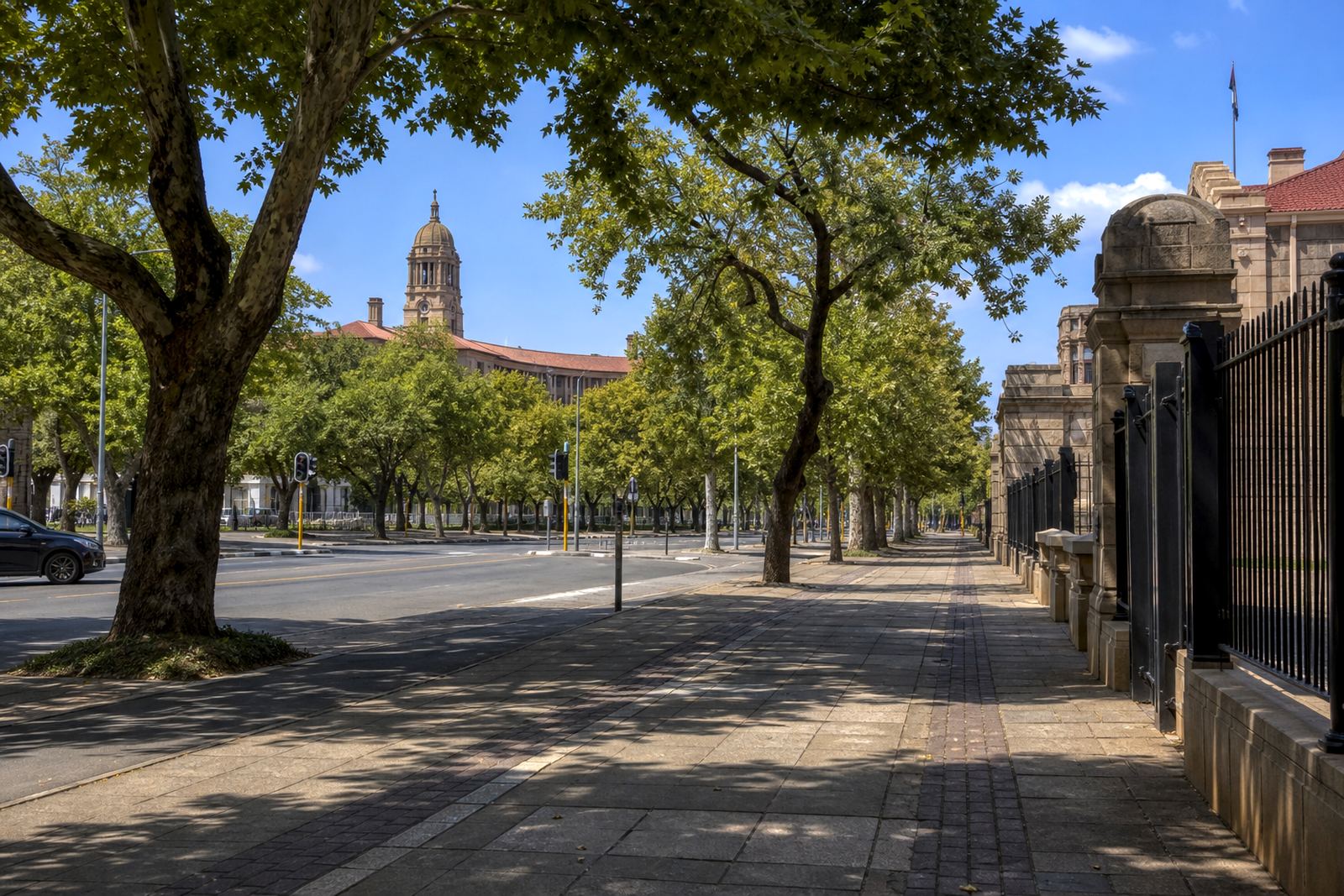
Pretoria is a natural place for conversations about the state, public administration and the rules that shape daily life. As the administrative capital, it brings together civil service work, policy briefings, diplomatic activity and a steady flow of commentary on how institutions function. That makes it a useful audience for political essays and podcast episodes that explain governance without shouting past the facts.
Clear, non-partisan discussion of how political systems operate in South Africa and across the continent. We cover themes such as executive authority, legislatures, oversight, public budgeting, local government, courts and the practical limits of policy implementation. We keep the language plain, with substance rather than slogans.
From our base in Rosebank, Johannesburg, we regularly handle enquiries from Pretoria and the broader Tshwane area. Travel is straightforward in normal conditions, though traffic on the N1, M1 links and arterial roads can add time during peak hours. For that reason, many Pretoria clients prefer remote turnaround, with content shared, marked up and finalised through a tidy process that avoids unnecessary back and forth.
Who in Pretoria uses our services
Pretoria clients usually want political content that is careful, well organised and grounded in history and institutions. We work with people and organisations that need support for podcast episodes, long-form essays, explainers and publication scheduling. The common thread is a need for material that can stand up to close reading, especially where public policy, governance and civic education are concerned.
- Researchers and policy writers needing fact-checked political copy
- Podcast hosts preparing structured episodes on African governance
- Editors refining essays on parliament, elections and constitutional history
- Public-interest groups that need neutral background notes
- Students and professionals seeking clear explanations of political systems
Pretoria also has a strong audience for commentary that links national institutions to everyday realities. That means the content has to be accurate, well paced and suitable for a thoughtful reader. We do not rush a point just to fill airtime, and we do not pad an article with noise. If something needs further checking, we check it.
Podcast production and editing for Pretoria audiences
For Pretoria-based listeners, podcast content often works best when it is structured and easy to follow. We assist with podcast production, episode editing, script development, audio mastering and show notes so that each episode lands cleanly. That matters when a discussion moves from the history of liberation movements to modern institutions, or from provincial administration to national oversight.
We account for that in editing and mastering, so the final version remains clear enough for earbuds, office speakers or a commute between Pretoria and Johannesburg. In practical terms, we cover the small technical fixes that keep serious political content listenable.
- Script development for introductory or in-depth political episodes
- Editing to tighten pacing and remove repetition
- Audio mastering for cleaner speech and balanced levels
- Show notes that summarise the main themes without overclaiming
- Publication scheduling for regular release cycles
Essays on governance, history and institutions
Our essays explain politics as a system, not just as a headline. In Pretoria, that often means looking at how the civil service works, how Parliament and oversight bodies fit together, and how constitutional design affects public administration. We also handle comparative African topics, including political institutions in Kenya, Nigeria, Ghana and Zambia, where the details differ but the questions about accountability, representation and state capacity remain familiar.
We keep the tone non-partisan. That means no endorsements, no predictions and no fabricated drama. We explain ideas such as federalism, coalition government, patronage, party discipline, executive power and administrative reform using general knowledge and careful sourcing. Where a topic is contested, we say so plainly. Where the record is uneven, we note the limits. Clarity comes first, without propaganda.
Copy editing and essay editing are especially useful for longer pieces that move between history and current affairs. We pay attention to sentence flow, names, dates and consistency, and we make sure the argument stays on track. A good political essay should read as if the writer knows the subject and respects the reader, not as if it was assembled in a hurry.
Turnaround, travel and practical conditions in Tshwane
Pretoria is close enough for planned meetings from Johannesburg, yet far enough that travel still needs a proper schedule. We factor in the route, the time of day and the purpose of the visit. For many clients, the better option is to send material through the enquiry form and handle the work remotely, with comments returned in a format that is easy to review and approve.
Local conditions matter. In Pretoria and the wider Tshwane area, power interruptions can interrupt recording, and dry winter air can make indoor audio sound flatter than expected. During the wetter months, background noise from rain and traffic can also affect a session. We cover those issues through sensible recording practice, careful editing and organised file management. If a project has several versions, we keep the archive in order so nothing gets lost or mixed up.
- Remote turnaround for essays, notes and episode drafts
- Scheduled reviews for projects with multiple contributors
- File organisation and archive management for series work
- Support for deadline-sensitive publication plans
Answering a Pretoria reader
Enquiries from Pretoria go through the contact page form, which keeps the first step simple and documented. That helps us understand the brief, the subject, the timing and whether the work is for podcast support, essay editing or a larger publishing schedule. It also helps us match the right team members to the task, whether the need is research, editing, audio or coordination.
Our core team includes Thabo Michael Mabuza, Naledi Seakamela, Aisha Daniels, Kwanele Dlamini, Nadia Barnard and Ntando Ndaba. Each role supports a different part of the process, from planning and research to publication and audience coordination. For Pretoria clients, that means the same job can move from draft to final release without confusion, even when the topic is technical or time-sensitive.
If you are based in Pretoria and need political commentary support that treats governance seriously, we can help with a clean, orderly process and measured content. The work is handled with care because in politics, accuracy and restraint matter just as much as speed.