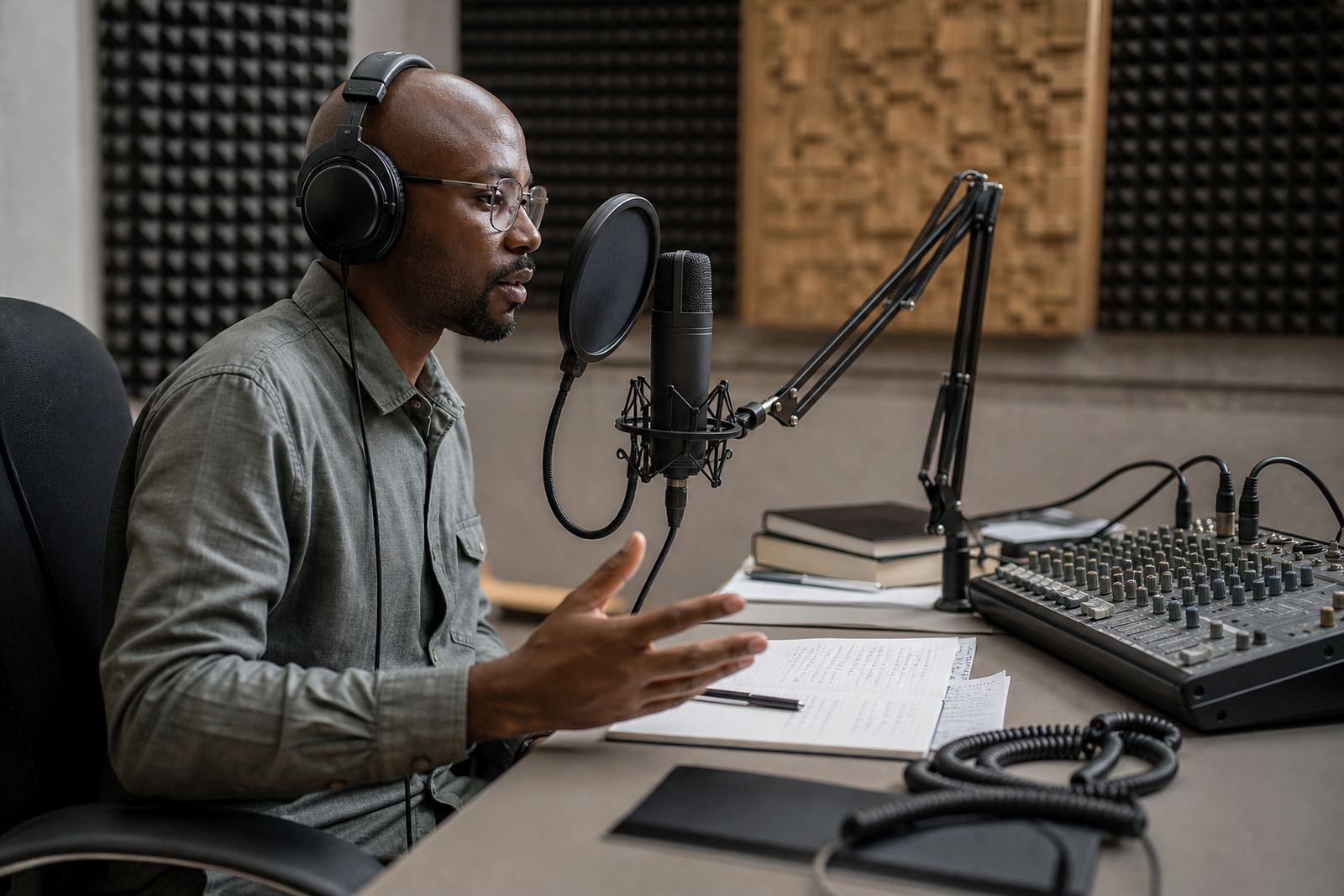
Background research that keeps commentary grounded
Research support is the stage that sits behind every well-argued episode or essay. It brings together the basic facts, the institutional context and the wider historical setting so a discussion can move past surface level reactions. For topics across South Africa, Kenya, Nigeria, Ghana and Zambia, that means checking the legal and constitutional framework, the relevant political history, and the public records that help explain why a subject matters now.
We do not shape research around a party line. The work is built to support clear, non-partisan commentary that explains political ideas, how institutions function, and how public language around power has changed over time. That can include background on electoral systems, executive authority, coalition politics, devolution, legislative roles, public finance, or the place of civil society. In practice, it means your presenter or writer gets a cleaner path into the topic and less time spent hunting for scattered references.
What the research pack includes
Each assignment is scoped to the episode, essay or series outline, then organised into a working pack that is easy to use in production. We structure sources so you can see what is confirmed, what needs caution, and where the key context sits. This is especially useful when a topic has a long institutional history or when public debate uses terms that need proper explanation.
- Topic framing notes with the central question, sub-topics and definitions
- Primary and secondary source lists arranged by relevance and reliability
- Institutional background notes on constitutions, parliaments, courts and electoral bodies
- Timeline support for historical developments, reforms and major policy shifts
- Source summaries with key points, caveats and cross references
- Follow-up questions for scripting, editing or presenter briefing
- Archive organisation for recurring topics, series work and later updates
For podcast teams in Johannesburg, Pretoria, Soweto, Nairobi, Lagos, Accra or Lusaka, this format helps keep production moving even when the topic is technical or the reporting environment changes quickly. It also makes it easier to reuse background notes for future episodes without starting from scratch each time.
How the research process works
The process starts with a short brief that sets the topic, audience, tone and deadline. From there, we agree the level of depth needed. A weekly commentary episode does not need the same treatment as a long-form essay or a themed series on democratic institutions. We then gather source material, sort it into a usable order and flag any points that need extra verification before publication.
- 1. Briefing: We confirm the topic, scope, region and output format.
- 2. Source gathering: We collect official records, background readings and relevant commentary from general knowledge sources.
- 3. Sorting and verification: We separate core facts from interpretation and note areas that need care.
- 4. Delivery: We send a clean research pack with notes, source paths and suggested angles.
- 5. Revision support: If the script or essay changes, we update the pack so it still matches the final direction.
Where needed, we also coordinate with script development, fact checking and essay editing so the research lines up with the final publication. That handover matters when a topic moves from background context into a tighter editorial argument and the source trail needs to remain tidy.
Turnaround times for fast and planned work
Turnaround depends on the depth of the topic and how much source checking is needed. A brief background note for a familiar subject can often be turned around within a business day. A fuller research pack for a complex regional issue, such as constitutional change, coalition politics or a long running institutional dispute, usually needs two to four business days. For series planning, the lead time is longer because the work includes theme mapping, episode sequencing and archive organisation.
When a deadline is tight, we can prioritise the first layer of research so writing and recording can begin while deeper verification continues in the background. That approach is useful for Johannesburg and Gauteng based teams working to a release schedule, and for clients coordinating across time zones. If the topic involves several countries, we may phase delivery so the most urgent section arrives first and the wider comparative notes follow after.
Research work is also sensitive to public holidays, parliamentary calendars and publishing windows. If an episode is tied to a budget speech, court ruling or policy announcement, we plan the schedule with those dates in mind so the notes are ready before the pressure starts to build.
Pricing approach for one-off and recurring support
Pricing is based on scope, urgency and the level of source work required. A narrow topic with a short brief costs less than a cross-country comparison or a long background pack for a multi-part series. We quote after reading the brief so the price reflects the actual work, not a generic flat fee. That way, you know whether you are paying for basic background notes, deeper source organisation, or ongoing research assistance across several episodes.
For regular production, a monthly support arrangement can be more practical than booking each topic separately. This works well for teams that publish weekly or fortnightly and need consistent background notes, archive management and update checks. If the subject matter is broad, we may price by episode bundle or by research hours, depending on how the material is structured.
- One-off research for a single episode or essay
- Series-based pricing for recurring themes or season planning
- Monthly support for ongoing production calendars
- Urgent turnaround pricing where the deadline is same day or next day
- Update fees when a published topic needs fresh source checks later on
All pricing is discussed before work begins, with the brief setting the scope clearly. That helps avoid confusion when a topic starts as a simple explainer but grows into a wider comparative piece that needs more reading and note organisation.
Keeping sources current after publication
Political commentary does not stand still. New statements, court matters, policy shifts and institutional changes can alter the meaning of an earlier episode or essay. For that reason, we offer review points for recurring topics and archive-based projects. These can be weekly, monthly or linked to a release cycle, depending on how often the subject is revisited.
Maintenance includes checking whether a source is still current, whether a definition needs tightening, and whether a background note should be updated for a new episode. It is especially useful for series that return to elections, governance reform, public service delivery or regional cooperation. The goal is not to rewrite old work every time, but to keep the background accurate enough that the next piece builds on solid ground.
For archive management, we also keep research folders orderly so older material can be found quickly when a theme comes back. That matters when an editor or producer needs to compare a current development with earlier notes and does not have time to search through scattered files.
Who this service helps
Research support is useful for podcast producers, essay editors, presenters and small publishing teams that want dependable background without losing editorial independence. It suits clients who need political explanation rather than commentary that is loud for its own sake. It also helps when a topic crosses borders and the references need to stay clear across several countries and institutional systems.
Our base in Rosebank, Johannesburg places us close to the wider Gauteng media and publishing environment, but our work supports conversations across South Africa and the continent. Whether the brief comes from a solo commentator in Soweto, a producer in Pretoria, a publisher in Accra or a series lead in Lagos, the service remains the same: well organised background material, careful source handling and notes that make sense when the recording starts.
If you need context for the next episode or a cleaner base for a long essay, research support is the place to begin. It keeps the work factual, readable and ready for publication without pushing the argument in any one political direction.
Key facts
| Service area | Johannesburg, Pretoria, Soweto, Nairobi, Lagos, Accra, Lusaka and wider Gauteng |
|---|---|
| Typical turnaround | 1 working day for simple background notes, 2 to 4 working days for detailed packs |
| Inputs needed | Topic, target audience, format, deadline and any key source preferences |
| Output format | Organised research pack with notes, source list, context summary and follow-up points |
| Review points | Weekly, monthly or per release cycle for recurring topics and archive updates |
| Pricing basis | Quoted per brief, with options for one-off work, bundle pricing or ongoing support |