What Separation of Powers Means in Practice
In a constitutional system, separation of powers means law-making, day-to-day governing and court decision-making are not kept in one set of hands. The idea is simple: when institutions have different jobs, they can check one another and reduce the risk of arbitrary rule.
In many African states, the principle is written into a constitution but the real test comes from practice. A parliament may have formal authority to pass laws, a president or cabinet may run the administration, and courts may interpret the law. The question is not only whether these powers exist on paper, but whether each institution can use them without improper pressure.
- Look for clear legal limits on each branch.
- Check whether appointments are independent and lawful.
- See whether one branch can punish the others for doing their jobs.
The Legislative Role: Making Law and Testing Policy
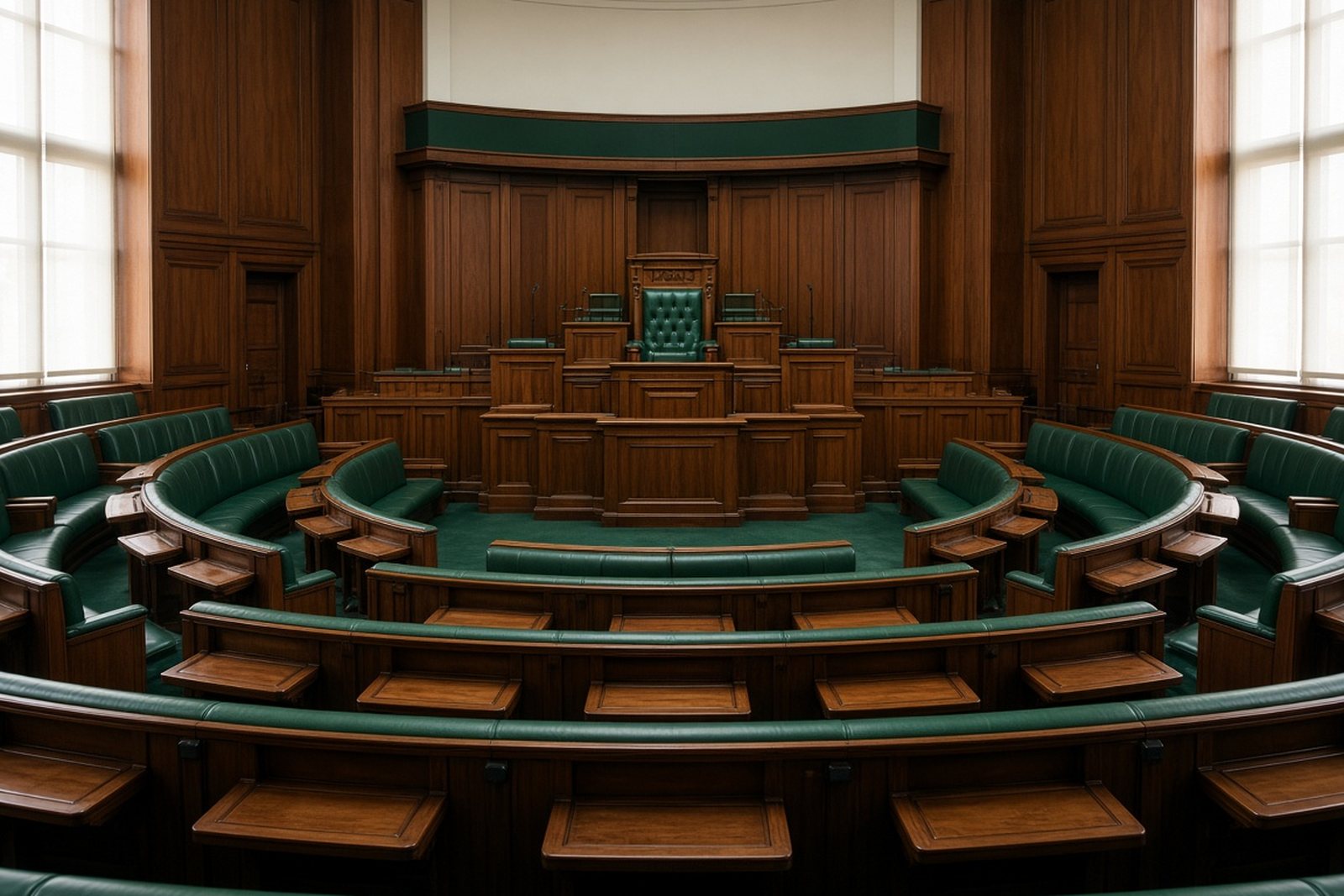
The legislature, often called parliament or the national assembly, represents the public through elected members. Its core tasks are to make laws, approve budgets, question ministers and hold hearings on public issues. In a healthy system, it is more than a voting chamber. It should examine proposals carefully and ask whether they fit the constitution and the public interest.
A practical way to assess legislative strength is to ask whether members can speak freely, access committee documents and amend bills without being forced into a single line. If parliament is treated only as a place to approve decisions already made elsewhere, separation of powers becomes weaker.
- Does the legislature debate bills before they become law?
- Can committees summon officials and review budgets?
- Are opposition and minority voices allowed to speak?
The Executive Role: Governing Within the Law
The executive carries out laws and manages the state administration. This includes ministers, departments, provincial authorities and other public offices that deliver services and enforce regulations. The executive should act within authority granted by law, not outside it.
In practice, tension often appears when the executive tries to steer parliament, delay oversight or influence appointments that should be made independently. A strong executive is not the same as an unchecked one. Good governance depends on the ability to act decisively while still respecting constitutional limits, procurement rules and public accountability.
For citizens and analysts, useful questions include whether emergency powers are narrowly used, whether spending decisions are transparent and whether administrative action can be challenged in court. Those checks matter when government offices handle land, policing, licensing or public finance.
The Judicial Role: Interpreting the Constitution and Protecting Rights
Courts resolve disputes, interpret statutes and decide whether laws or government actions fit the constitution. They do not make policy in the same way as elected bodies, but they play a vital role in making sure public power stays lawful. Judicial independence is therefore central to separation of powers.
Judges need security of tenure, fair appointment processes and freedom from political pressure. If courts fear retaliation for unpopular rulings, the entire constitutional design weakens. At the same time, courts should explain their reasoning clearly and stay within their own mandate. That balance helps the public trust the system, even when a ruling is contested.
- Can courts review executive action without interference?
- Are judges appointed through a transparent process?
- Are court orders respected by state institutions?
How the Branches Check One Another
The strength of separation of powers lies in mutual restraint. Parliament can investigate government conduct, the executive can propose and implement policy, and courts can test whether both are acting lawfully. None of these roles should erase the others.
A practical checklist for balance is useful when reviewing any constitution or political system. Start with the text, then compare it to daily reality. A country may have neat legal language but still allow the ruling office to dominate appointments, budgets and enforcement. That is why observers should study both formal rules and how they are applied.
- Are budgets approved through open procedures?
- Can a court stop unlawful conduct by the state?
- Can parliament remove or question officials when needed?
- Are independent institutions protected from interference?
A Simple Way to Review Institutional Balance
If you are reading about constitutional design, use a step-by-step method. First identify the institutions named in the constitution. Second, note what powers each one has. Third, check whether there are limits, remedies and review mechanisms. Fourth, ask whether those rules work in practice across ministries, legislatures and courts.
This method helps when comparing South Africa, Kenya, Nigeria, Ghana and Zambia, where constitutional forms may differ but the basic question is similar: who can decide, who can block, and who can review. A useful analysis stays specific and avoids slogans. It asks how power is actually organised, who controls the purse and whether legal remedies are available when something goes wrong.
- List the powers of each branch.
- Identify the oversight tools each branch has.
- Check for independence in appointments and removals.
- Review whether citizens have access to legal remedies.