What Urban Politics Covers
Urban Politics is a focused podcast episode and companion essay set that explains how cities change when populations grow faster than roads, water systems and housing supply. It looks at the everyday choices that shape a city, from zoning and informal settlement upgrading to transport corridors, rates, by-laws and the tensions between municipal and national powers.
The episode is written for listeners who want clear context rather than slogans. It helps make sense of why planning disputes happen, how metro councils function, and why the same issue can look different in Johannesburg, Nairobi, Lagos, Accra or Lusaka. The tone stays practical and non-partisan, with room for historical background where it helps explain current policy choices and institutional friction.
A better way to follow city politics without getting lost in jargon. There is no need to know every committee name or ward boundary before engaging with the material, though the episode does assume an interest in how public life works in a busy city.
Episode Length, Format Options and Use Cases
Urban Politics can be produced as a single tight episode, a longer discussion piece, or a short series depending on the depth required. The standard formats are built to suit busy audiences who may be commuting in Gauteng traffic, catching up after work, or listening over a weekend. A compact version works well for a general audience, while a longer cut gives space for background on planning law, municipal finance and the politics of urban services.
- Short episode: 20 to 30 minutes for a quick overview and clear definitions.
- Standard episode: 35 to 50 minutes for balanced commentary and examples across cities.
- Extended episode: 60 to 75 minutes for deeper analysis, added context and careful explanation.
- Companion essay: 900 to 1,500 words for publication alongside the audio.
The format suits university groups, civic groups, public affairs audiences and anyone following the pressure points of urban growth. It also suits organisations that want an explainer on planning disputes, land debates or metro governance without turning the subject into a shouty exchange. The presentation is measured, but not dull.
Where It Suits Best
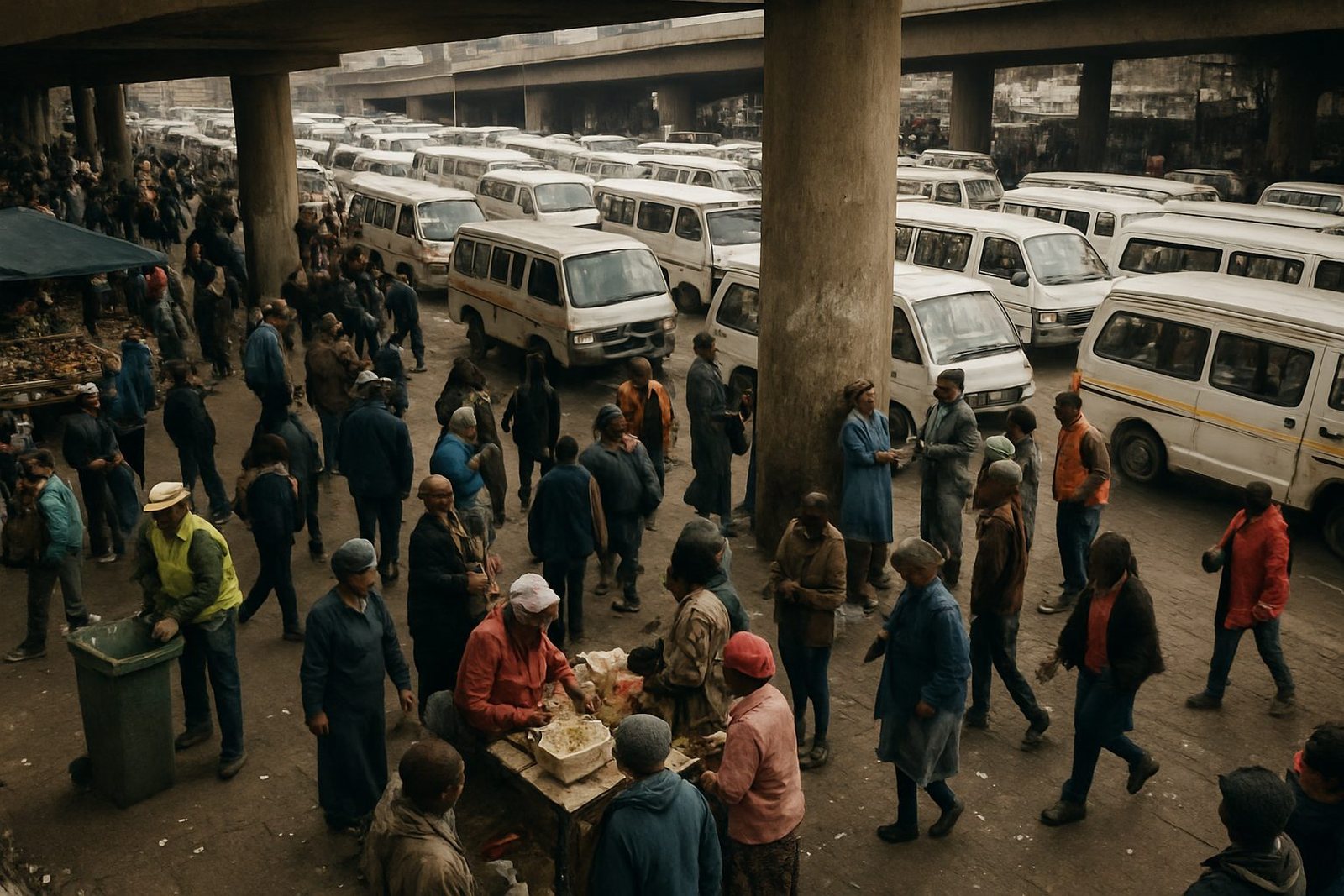
Urban Politics is especially useful in places where city growth is visible in daily life. In Johannesburg and Pretoria, it speaks to transport links, spatial inequality and the strain on municipal systems. In Soweto, it can frame the relationship between local service delivery and wider metro planning. In Nairobi, Lagos, Accra and Lusaka, it helps listeners think through congestion, housing pressure, road networks and the challenge of governing fast-changing urban areas.
It suits campuses, civil society discussions, newsroom briefings and policy conversations where people need a common starting point. It also suits listeners who live in peri-urban areas and are seeing farmland turn into housing, malls, taxi routes and mixed-use developments within a few years.
- Good for civic education and public affairs programming
- Useful for urban studies, politics and governance audiences
- Suitable for community discussions on housing and transport
- Africa-wide comparisons without partisan framing
Because the episode compares cities across Africa, it gives enough breadth to be useful without trying to force every place into the same model. That matters, because municipal structures and political pressures differ from one city to another, even when the underlying planning problems look similar.
How It Is Produced and Delivered
Production is handled from Rosebank, Johannesburg, with script development, research support, fact checking, episode editing, audio mastering and publication scheduling managed by the team. The episode can be delivered as audio only or as a paired audio and essay release, with show notes to help listeners follow key themes. If a series is required, the material can be split into chapters such as city growth, land administration, metropolitan budgets and service delivery.
Listeners only need a phone, laptop or other audio player and access to streaming or downloaded audio.
Publication scheduling can be arranged around release windows that suit editorial calendars or campaign timelines. Archive management is available if the episode forms part of a wider series on African politics and urban governance. The work can be kept simple, or built into a fuller publishing plan with follow-up essays and related topics.
How we publish
As with any political commentary series, the main care needed is editorial discipline. Sources must be checked, terminology kept consistent, and claims kept within what can be supported by public knowledge or clearly explained analysis. When a new law, budget speech or planning proposal changes the picture, the script can be updated before publication so the episode stays current.
Regular servicing for this product means ongoing support rather than physical maintenance. That includes fact checking, copy editing, audio mastering, show note updates and archive management. If the episode becomes part of a series, later instalments can be coordinated so the language, tone and structure remain steady across releases. It is a simple way to keep the work coherent over time, and avoid confusion in the archive.
- Check the release date and whether the content needs a current affairs update
- Confirm the preferred episode length before scripting begins
- Choose whether you need only audio or audio plus essay and show notes
- Ask for archive labelling if the episode will sit inside a wider series
This approach works well for listeners who value accuracy and a steady voice. It also helps avoid the sort of rushed commentary that can muddle planning terms or overstate what a metro can actually control.
What to Check Before Ordering
Before ordering Urban Politics, it helps to be clear about the audience, the geography and the level of detail needed. A general audience version should stay broad and accessible, while a specialist version can go deeper into municipal structures, land-use trade-offs and the history of urban governance. If the focus is one city only, that should be noted early so the research and script can be shaped accordingly.
Also consider the mix of formats. Some clients only need an episode, while others want an essay, show notes and publication scheduling as part of the same package. If the release will be used for teaching, campaigning or internal briefings, that should be stated so the tone and structure fit the purpose. The team in Johannesburg can support projects for clients in Gauteng and across African cities, with enquiries handled through the contact page form.
For best results, provide the target cities, the preferred length, any key themes to include, and whether the piece should lean more toward history, institutions or current urban pressures. The clearer the brief, the easier it is to produce a clean and useful result.
Key facts
| Product type | Independent political commentary podcast episode with companion essay option |
|---|---|
| Core topic | City growth, planning disputes and metropolitan governance |
| Standard lengths | 20 to 30 minutes, 35 to 50 minutes, or 60 to 75 minutes |
| Delivery format | Audio only or audio plus essay, show notes and publication scheduling |
| Editorial support | Research support, fact checking, script development, audio mastering and archive management |